
That lingering rotten-egg stench hitting you when you open your cooler isn’t just annoying—it’s a red flag. Bacteria and mold are feasting on microscopic food particles trapped in your cooler’s seams, drain channels, and even the insulation. Left unchecked, these odors become permanent as organic residues (especially dairy, meat, or fish) seep into plastic pores. The good news? You don’t need expensive chemicals or a new cooler. In this guide, you’ll learn exactly how to get smell out of cooler using pantry staples and sun power, plus the critical drying step 90% of people skip that guarantees mold returns.
Why Rotomolded Coolers Trap Rotten Smells Forever
Rotomolded coolers like Yeti or RTIC are insulation champions but odor nightmares. Their thick, non-porous walls prevent spills from evaporating while tiny cracks in gaskets and drain channels become bacterial breeding grounds. When dairy or meat decomposes, it releases sulfur-based molecules that bind to plastic at a microscopic level—soap alone can’t reach them. That’s why rinsing with water just masks the problem. You need alkaline or acidic solutions to chemically neutralize these compounds. Ignoring this leads to permanent “rotten cooler syndrome,” where even new ice smells like spoiled milk.
Deep Clean Your Cooler: Remove Hidden Grime in 15 Minutes
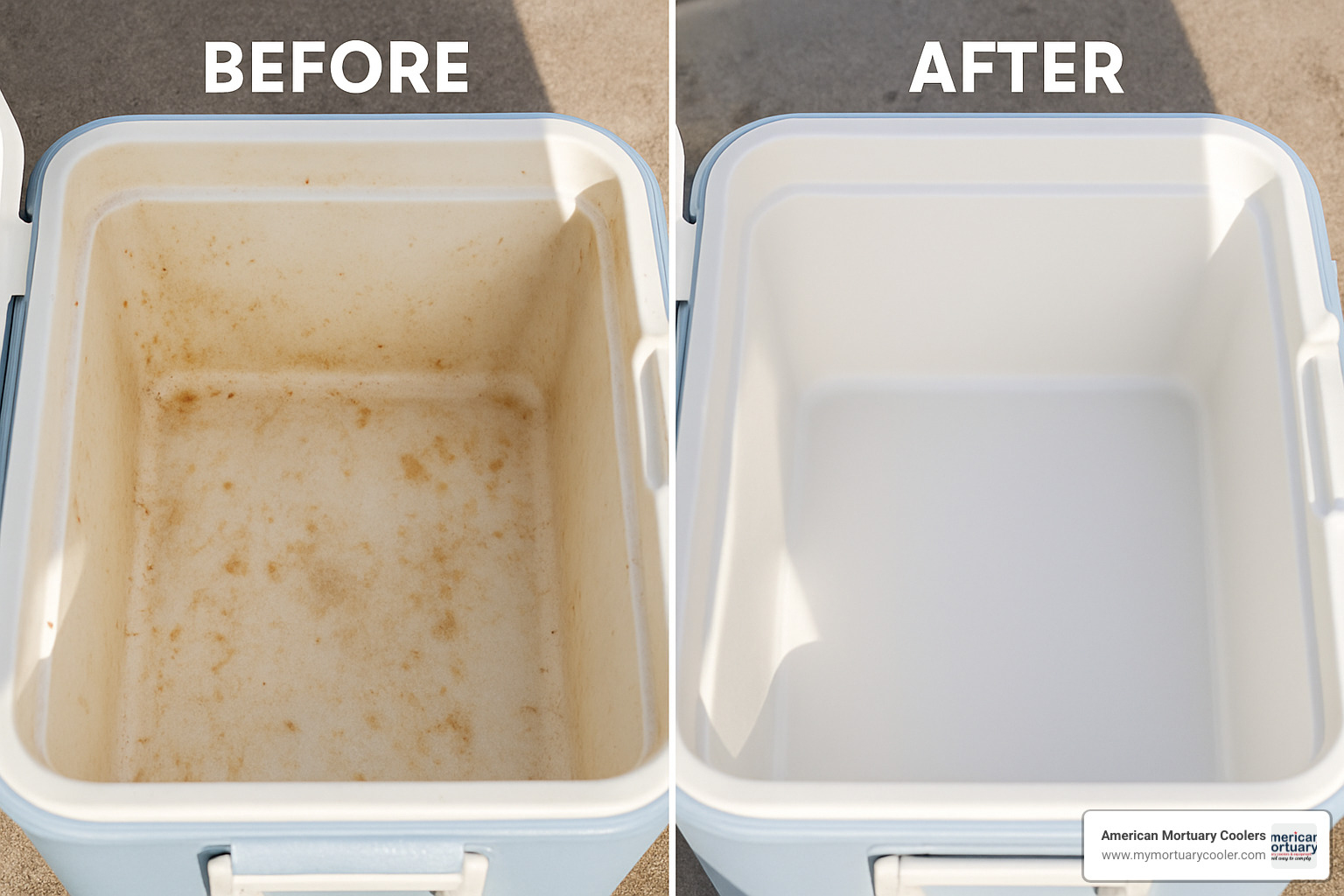
Before deodorizing, you must eliminate the organic fuel feeding bacteria. Skipping this step guarantees odors return within days.
How to Unlock Drain Channel Gunk in 3 Steps
- Remove all parts: Take out drain plugs, latches, and rubber gaskets (soak these separately in vinegar).
- Scrub seams aggressively: Use an old toothbrush dipped in hot, soapy water to dislodge grime where the lid meets the body and along the floor-wall seam. Focus on the drain channel—this slimy trench hides 80% of odor sources.
- Rinse upside down: Hold the cooler vertically under running water for 2 minutes, shaking to flush debris from hidden crevices.
Pro Tip: Place crumpled aluminum foil in the drain channel and twist—it acts like a pipe cleaner to scrape biofilm.
Baking Soda Paste Method for Sour or Rotten Meat Odors
For pungent biological smells (think forgotten fish or spoiled milk), baking soda’s alkaline properties neutralize acidic odor molecules better than any spray. It’s non-toxic and penetrates deeper than liquids.
Apply Paste for Maximum Odor Destruction
- Mix ¾ cup baking soda with 3 tablespoons water to form toothpaste-thick paste.
- Coat every surface: Use a sponge to smear paste into corners, under the lid lip, and around the drain hole. The thicker the layer, the longer it works.
- Wait 24 hours minimum: Close the lid and let it sit. Baking soda needs time to break down odor compounds—rushing this step leaves smells intact.
- Scrub with warm water: Use a non-scratch brush to remove residue, then rinse until water runs clear.
Warning: Never use baking soda paste on soft-sided coolers—it can damage fabric liners. Stick to vinegar for those.
Vinegar Soak Fix for Mildew Smells in 6 Hours
Musty, damp odors mean mildew is growing in your cooler’s insulation. Vinegar’s acetic acid kills mold spores on contact and neutralizes alkaline residues without toxic fumes.
Quick Vinegar Protocol (No Bleach Required)
- Fill your cooler with equal parts white vinegar and hot water (e.g., 2 gallons vinegar + 2 gallons water).
- For severe mildew, add 1 cup citric acid powder (boosts vinegar’s power 3x).
- Let it soak 4–6 hours—no longer, or vinegar can etch plastic.
- Rinse with lemon water: Mix juice of 4 lemons with 1 gallon water to eliminate vinegar smell and leave freshness.
Time Saver: For Yeti/RTIC coolers, remove the drain plug during soaking—this lets vinegar penetrate the insulation channel.
Bleach Solution Protocol for Severe Rot (With Critical Neutralization)
Use this nuclear option only for sewage-like odors from rotten meat left for weeks. Bleach kills all bacteria but leaves chlorine smells that require immediate neutralization.
Never Skip the Baking Soda Follow-Up
- Mix 1 cup bleach per 9 cups water (10% solution).
- Scrub interior for 5 minutes, then drain.
- Rinse 3x with clean water—any bleach residue ruins neutralization.
- Immediately apply baking soda paste: This absorbs chlorine molecules. Wait 12 hours.
- Never close the cooler after bleach—ventilate it for 24 hours first.
Danger Zone: Bleach + vinegar = toxic chlorine gas. Always rinse bleach completely before using acidic solutions.
Why Closing a Damp Cooler Guarantees Mold Next Time

This is the #1 mistake that makes odors return. Moisture trapped in insulation breeds mold within 48 hours. Even “dry” coolers have hidden dampness in seams.
Sun-Dry Like a Pro in 24 Hours
- Prop lid wide open with a rolled towel wedged inside.
- Place in direct sunlight—UV rays kill mold spores soap can’t reach.
- Aim a fan at the interior for 12+ hours. Check seams with your palm; if cool/moist, dry longer.
- Test readiness: Press a tissue against walls—if it sticks, it’s still damp.
Pro Tip: For Orca coolers, remove the rubber gasket and dry it separately—it’s a moisture magnet.
Newspaper Absorption Trick for Lingering Smells
When odors persist after cleaning, newspaper’s porous fibers pull residual molecules from plastic. It’s cheaper and safer than charcoal.
3-Day Newspaper Fix
- Crumple 10–15 sheets of non-glossy newspaper into loose balls.
- Pack tightly into the cooler—no empty space.
- Close the lid and wait 72 hours.
- Replace paper daily; discoloration shows it’s absorbing odors.
Why it works: Newspaper’s lignin binds to sulfur compounds causing rotten smells.
3 Daily Habits to Prevent Cooler Odors Before They Start
Prevention takes 2 minutes but saves hours of deodorizing later. These habits stop smells at the source.
The Post-Trip 5-Minute Reset
- Rinse immediately: At home, hose out spills with vinegar-water solution (1:1).
- Dry upside down: Store on its side with plug removed for 48 hours—never upright.
- Baking soda keeper: Once bone-dry, place an open box inside. Replace monthly.
Pro Tip: Line coolers with a gallon ziplock bag for drinks—spills stay contained, and cleanup takes seconds.
When to Give Up: Permanent Odor Cases
Some smells can’t be fixed. If you detect a faint musty odor after multiple treatments, mold has likely colonized the insulation. Rotomolded coolers with this issue require professional ozone treatment—or replacement. For soft-sided coolers with fabric liners, cut out affected sections and replace with waterproof fabric.
Banishing cooler odors isn’t about masking smells—it’s about neutralizing the chemical compounds causing them. By targeting bacteria at the source with baking soda or vinegar, then enforcing strict drying, you’ll keep your cooler smelling fresh for years. Start tonight: empty that forgotten cooler, apply the paste method, and tomorrow, it’ll be ready for ice without the stench. Your next camping trip deserves a clean start.