
Forget noisy compressors and sky-high electricity bills—your home can stay cool without flipping a switch. How does a passive cooler work? It’s not a single device but a symphony of natural forces working together to regulate indoor temperatures. Passive cooling leverages sunlight, wind, and building materials to block heat at the source, absorb excess warmth, and flush out hot air—without mechanical systems. In hot climates, properly implemented passive cooling slashes AC dependence by 70-90%, keeping interiors 10-15°F cooler than outside temperatures. You’ll discover exactly how these six core mechanisms transform your house into a natural cooling machine and how to apply them immediately.
Block Solar Heat Before It Enters: Your First Line of Defense
Stopping heat at the source beats fighting it after it invades your space. Shading prevents the single largest contributor to indoor heat gain: direct sunlight through windows and walls. By intercepting solar radiation before it converts to heat inside your home, you eliminate the need for energy-intensive cooling later. This strategy alone can reduce cooling loads by 40-80% depending on climate.
Install Exterior Shading That Works With the Seasons
Overhangs and awnings positioned above south-facing windows (in the Northern Hemisphere) block high-angle summer sun while allowing low winter sun to warm interiors. For east and west windows—which receive harsh, low-angle rays—use adjustable exterior shutters or retractable awnings. Deploy them by 10 AM on sunny days to prevent morning/evening heat spikes. Critical mistake: Interior blinds trap heat between glass and fabric, turning windows into mini-greenhouses. Always shade from the outside.
Plant Deciduous Trees as Living Sunscreens
Position maple or oak trees 15-20 feet west of your home. Their summer canopy blocks 60-80% of solar radiation, while bare winter branches allow warming sunlight through. Within 5 years, mature trees create a 10-25°F temperature difference under their shade compared to exposed areas. Pro tip: Avoid evergreens on the west—they block winter sun you want.
Create a Natural Airflow Engine: Cross-Ventilation and Stack Effect
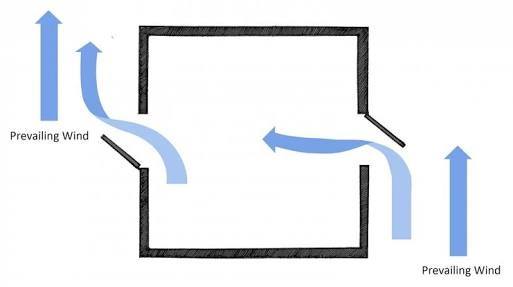
Passive cooling harnesses two free forces: wind pressure and thermal buoyancy. Cross-ventilation pulls cool air through opposing windows when wind creates pressure differences, while the stack effect exploits hot air’s natural rise. Together, they replace stagnant indoor air with fresh outdoor air 2-4 times per hour—no fans required.
Position Windows for Maximum Cooling Breezes
Place operable windows on both windward (incoming air) and leeward (outgoing air) sides of rooms. For optimal flow, window openings should total 5-10% of the floor area. In narrow homes, align windows along a straight path; in wider layouts, use interior doors as air channels. Troubleshooting: If breezes feel weak, install casement windows that catch crosswinds better than double-hungs.
Build a Thermal Chimney to Pull Hot Air Out
Create a vertical “chimney” using a sun-heated atrium, light-colored roof, or dedicated vent shaft. As indoor air warms, it rises and escapes through high vents (like cupolas or clerestory windows), drawing cool air upward from lower openings. Visual cue: On calm days, hold tissue near a high vent—it should flutter upward when the stack effect activates. Aim for a 10-foot height difference between intake and exhaust vents for reliable flow.
Turn Floors and Walls Into Heat Sponges: Thermal Mass Tactics

Thermal mass materials like concrete, brick, or tile absorb excess heat during the day and release it slowly at night. This “thermal flywheel” effect flattens temperature swings, keeping rooms stable when outdoor temps swing 30°F+ between day and night.
Choose the Right Materials for Your Climate
In hot-arid zones (e.g., Arizona), use 4-inch concrete slabs or adobe walls—they absorb daytime heat and release it after sunset. In humid climates (e.g., Florida), limit thermal mass to north-facing walls to avoid overnight moisture retention. Key rule: Expose mass to indirect sunlight; cover it with rugs or furniture and it becomes useless. A 200 sq ft concrete floor can absorb 10,000+ BTUs of heat—equivalent to a small AC unit running 3 hours.
Avoid the Nighttime Recharge Trap
Thermal mass only works if cooled overnight. Open windows after 10 PM when outdoor temps drop below indoor levels, and close them by 8 AM. Warning: In humid climates, nighttime ventilation introduces moisture—use dehumidifying strategies like desiccant-coated walls instead.
Radiate Heat Straight to Space: Cool Roof Science
On clear nights, surfaces emit infrared radiation directly into the cold upper atmosphere (–454°F!). High-emissivity materials like metal roofs or specialized “cool roof” coatings enhance this effect, dropping surface temps 18-40°F below ambient air.
Select Roofing That Cools Itself After Dark
Opt for unpainted metal roofs (emissivity 0.8-0.9) or white elastomeric coatings (emissivity 0.9). These can radiate 100+ watts per sq meter on clear nights—enough to cool a room by 5-8°F without AC. Pro tip: Pair with reflective daytime coatings (solar reflectance >0.65) to reject 65%+ of solar heat.
Cool With Water Evaporation: Desert-Tested Tactics
Evaporative cooling exploits water’s latent heat of vaporization: as moisture evaporates, it pulls 970 BTUs per pound from surrounding air. This works best in dry climates (humidity <50%) where evaporation happens rapidly.
Implement Low-Tech Water Features
Place fountains in courtyards or breezeways—the evaporating mist can cool adjacent rooms by 10-20°F. For roofs, install misting systems that activate when temps exceed 85°F (shut off automatically above 90% humidity). Critical limitation: Avoid in humid zones—evaporation slows dramatically, adding moisture without cooling.
Tap Into Earth’s Constant Temperature: Earth Tube Installation

Below the frost line (4-6 feet deep), soil maintains 50-55°F year-round. Earth tubes—buried pipes carrying outdoor air—leverage this stable temperature to pre-cool incoming air by 15-25°F before it enters your home.
Install Earth-Air Heat Exchangers Correctly
Use 6-8 inch diameter PVC pipes buried 6+ feet deep, running 100+ feet for optimal heat exchange. Slope pipes 1-2% toward a condensation drain to prevent mold. Maintenance must: Clean tubes annually with a rotating brush—debris buildup cuts efficiency by 30% in 2 years. Warning: In humid climates, condensation inside tubes requires moisture traps to avoid damp indoor air.
Avoid These 3 Costly Passive Cooling Mistakes
Even well-intentioned designs fail when fundamentals are overlooked. These errors waste thousands in avoidable cooling costs.
Ignoring West-Facing Windows
West windows receive intense afternoon sun when outdoor temps peak. Fix: Install exterior roller shades on all west glazing—retractable ones pay for themselves in 2 summers. Without shading, west rooms become 20°F hotter than east rooms by 4 PM.
Skipping Airtight Construction
Leaks around windows or ducts let conditioned air escape and hot air infiltrate. Solution: Achieve ≤0.6 ACH50 (air changes per hour at 50 pascals) via blower door testing. Caulk gaps, seal electrical boxes, and use airtight drywall—this single step can cut cooling needs by 30%.
Mismatching Strategies to Climate
Using evaporative cooling in Miami (humidity 70%+) or high thermal mass in humid Houston creates damp, moldy interiors. Pro tip: In humid zones, prioritize shading and dehumidifying ventilation; in arid zones, maximize thermal mass and evaporative cooling.
Maintain Comfort During Power Outages: Your Emergency Protocol
When the grid fails, passive cooling keeps you safe. Close all windows and blinds by 9 AM on hot days. At night, open north-facing windows fully and use attic fans to boost stack effect. With proper design, passive-cooled homes stay within safe temperatures (75-80°F) for 48+ hours during blackouts—no backup generator needed.
Passive cooling isn’t magic—it’s physics applied intelligently. By blocking solar gain with smart shading, moving air through strategic ventilation, and using thermal mass as a heat battery, your home becomes a self-regulating cooling system. Start small: install exterior west-facing shades this week and plant one shade tree this fall. Within a year, you’ll notice cooler rooms and lower bills. For deeper transformation, consult a Passive House Institute-certified designer—they’ll tailor these principles to your exact climate and home layout. The result? Comfort that works with nature, not against it, 24/7.