If you’ve ever wondered how a blower cooler works while watching desert dwellers stay comfortable for pennies per hour, you’re uncovering one of nature’s most elegant cooling secrets. Unlike energy-guzzling air conditioners, these units—more formally called evaporative coolers or swamp coolers—use nothing but water, air, and physics to drop temperatures. When dry outdoor air hits the saturated pads inside your unit, evaporation instantly absorbs heat, transforming scorching 100°F air into refreshingly cool 75°F breezes. This guide reveals exactly how your blower cooler converts hot air into comfort using just four essential components, why humidity makes or breaks its performance, and how to maximize its efficiency in your specific climate—all without complex refrigerants or sky-high electricity bills.
Why Your Blower Cooler Feels Like a Desert Breeze (Not AC)
Your blower cooler operates on the same principle that makes you shiver stepping out of a pool on a windy day: evaporative cooling. When water evaporates, it steals heat from its surroundings to change from liquid to vapor—a process requiring 540 calories per gram of water. This “latent heat of vaporization” is pulled directly from passing air, causing immediate temperature drops. Crucially, this differs from AC systems that use chemical refrigerants to mechanically remove heat. While AC dehumidifies and cools simultaneously, your blower cooler intentionally adds moisture during cooling—making it feel like a refreshing desert monsoon rather than sterile, dry AC air. This fundamental difference explains why evaporative cooling slashes energy use by up to 75% but only works where humidity stays below 60%.
Inside Your Blower Cooler: The 4 Critical Components That Make It Work
:max_bytes(150000):strip_icc()/parts-of-a-swamp-cooler-2718628-a477e6f0787b4f8bb62ddf2def31d495.png)
How the Water Pump and Reservoir Create Continuous Saturation
Your unit’s reservoir holds 15-40 gallons of water depending on size, while a small submersible pump (consuming just 50-100 watts) constantly recirculates it. The pump pushes water through distribution tubes to the top of the cooling pads, ensuring even saturation. Without this continuous flow, pads would dry unevenly—killing cooling efficiency within minutes. Critical visual cue: During operation, you should see a thin, consistent water film cascading down the pads. If sections appear dry or spotty, check for pump clogs or low water levels immediately.
Why Celdek Pads Outperform Aspen in Modern Units
The cooling pads aren’t ordinary sponges—they’re engineered cellulose or synthetic media with thousands of microscopic channels. High-efficiency pads like Celdek use angled fluting to maximize air-water contact time. As hot air hits these water-coated channels, evaporation occurs across the entire surface area. Lower-cost aspen pads (wood shavings) work but clog faster with minerals. Pro tip: Replace pads annually in hard-water areas; failing to do so reduces cooling capacity by 30% as mineral crusts block airflow.
The Blower Fan’s Role in Moving 2,000+ CFM of Air
This is where “blower cooler” gets its name—the centrifugal blower fan moves massive air volumes (2,000-6,000 CFM in residential units) at low pressure. Unlike AC fans that recirculate indoor air, your blower pulls 100% fresh outdoor air through the pads. The motor’s wattage directly determines cooling power: a 1/3 HP motor cools 500 sq ft, while 1/2 HP handles 1,000 sq ft. Warning: Never operate without water—the fan alone will overheat pads, creating fire hazards and foul odors from baked-on minerals.
Step-by-Step: How Hot Air Becomes Cool Air in 60 Seconds
What Happens When Dry Air Hits Water-Saturated Pads
As 100°F outdoor air enters through louvers, the blower forces it through water-logged pads at 3-5 mph. In this critical 2-3 second contact window, dry air “steals” moisture from the pads through evaporation. Each gram of evaporated water removes 540 calories of heat from the air stream—dropping temperatures 15-40°F instantly. Key visual: You’ll see visible mist exiting the unit during initial startup; this disappears once humidity stabilizes.
Exactly How Much Temperature Drop You Can Expect
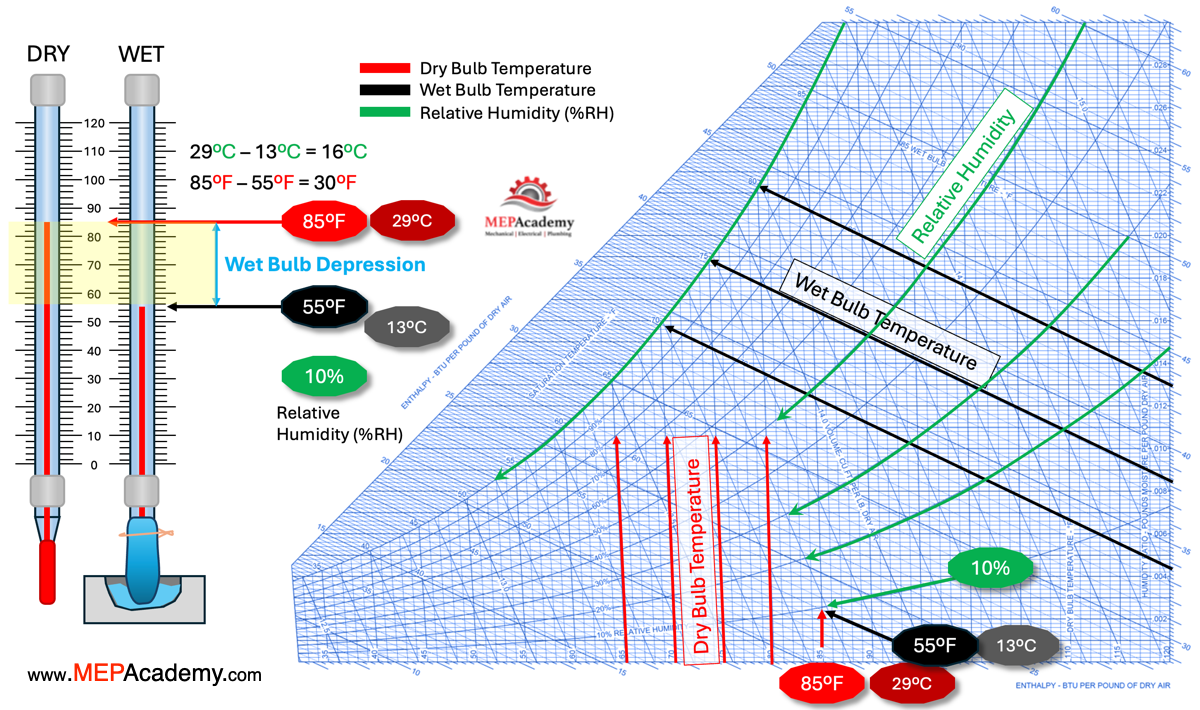
Your blower cooler’s maximum cooling is capped by the “wet-bulb temperature”—the lowest possible air temp achievable through evaporation. At 100°F and 30% humidity, wet-bulb is 70°F, allowing 30°F cooling. But at 90°F and 60% humidity, wet-bulb rises to 78°F—limiting cooling to just 12°F. Real-world example: In Phoenix (July avg 106°F/16% humidity), expect 75°F output. In Houston (94°F/70% humidity), you’ll get only 85°F—making the unit feel ineffective.
Blower Cooler vs AC: Why Humidity Changes Everything
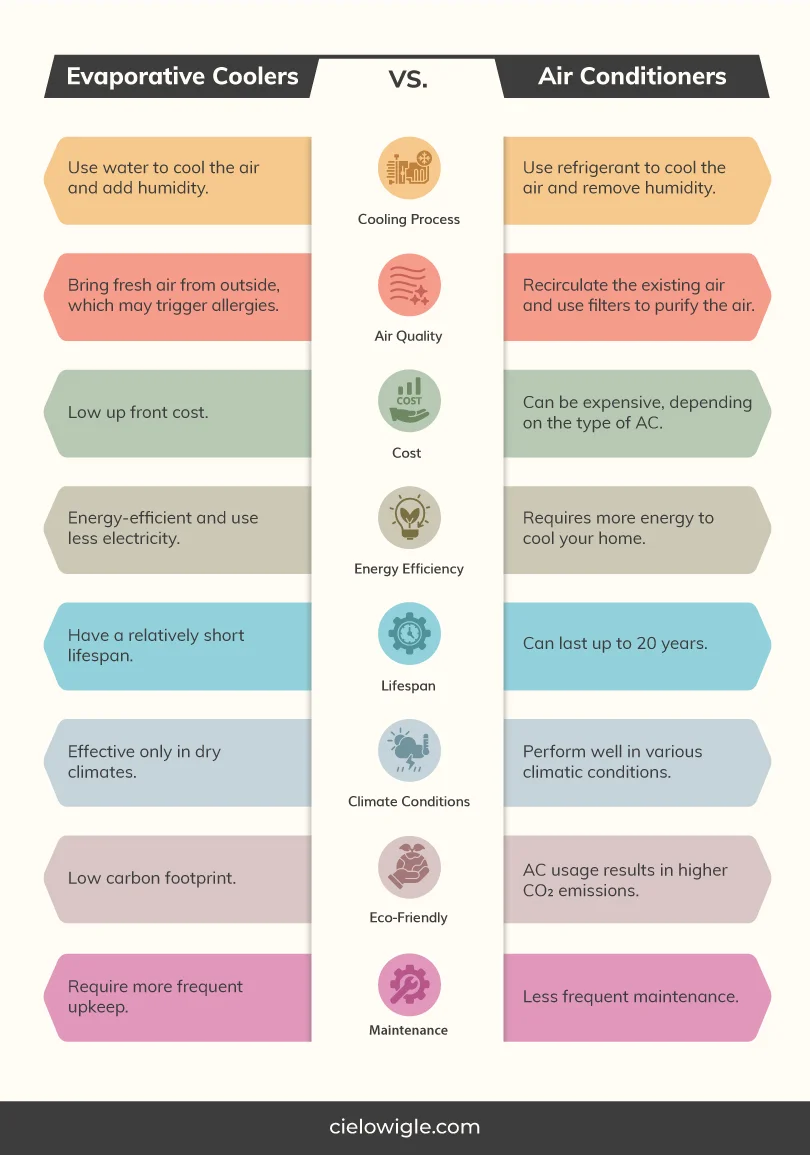
Your blower cooler adds 10-20% humidity while cooling, which feels refreshing in dry climates but oppressive where moisture already saturates the air. In contrast, AC removes humidity as it cools—essential for muggy regions. Energy comparison: Running a 2,000 CFM blower cooler costs $0.10/hour (600W total), while equivalent AC uses $0.40/hour (2,400W). But crucially, AC works at 90% humidity; your blower cooler becomes a humidifier above 60%—making 90°F feel like 95°F with added stickiness. Decision point: If your area’s summer humidity averages above 50%, skip evaporative cooling—it simply cannot overcome the dew point.
When Your Blower Cooler Works Best (And When It Fails)
The 30-100°F Dry-Bulb Sweet Spot
Blower coolers excel between 80-115°F with humidity under 50%. Below 70°F, evaporation slows too much for meaningful cooling. Above 115°F, even dry air can’t absorb enough moisture for significant drops. Climate reality check: They dominate in Arizona, Nevada, and New Mexico but fail in Florida, Louisiana, or coastal California. Check your region’s average July dew point: below 55°F = ideal; above 65°F = ineffective. Urgent tip: If outdoor humidity exceeds 65%, shut off your unit immediately—continued operation wastes water and grows mold in pads.
5 Real Advantages of Choosing Evaporative Cooling
- $100/year operating costs versus $500+ for comparable AC—thanks to minimal electricity use (only fan + pump)
- Instant fresh air exchange—no recirculated indoor pollutants since 100% outdoor air is constantly pulled in
- Zero refrigerants—eliminating GWP concerns and costly EPA-certified servicing
- Natural humidity boost—relieving dry skin and respiratory issues common in arid climates
- Simple DIY repairs—most issues involve clearing pump lines or replacing $20 pads, not sealed refrigerant systems
Avoid These 3 Costly Blower Cooler Mistakes in Humid Climates
Mistake #1: Ignoring humidity readings—Running your unit when dew point exceeds 60°F turns it into a steam generator. Always pair it with a hygrometer; shut off above 60% RH.
Mistake #2: Using hard water without treatment—Mineral deposits from untreated water clog pads in weeks. Install a $15 water softener cartridge or use distilled water.
Mistake #3: Skipping seasonal shutdown—Leaving water in the reservoir over winter causes mold growth and pad disintegration. Drain completely, clean with vinegar solution, and store pads dry.
Your Monthly Blower Cooler Maintenance Checklist
- Daily: Verify water level covers pump intake (add 1-2 gallons if low)
- Weekly: Inspect pads for white mineral crusts; scrub gently with brush if present
- Monthly: Disassemble pump, clear impeller of debris, and check float valve operation
- Seasonally: Replace pads, deep-clean reservoir with 1:10 bleach-water solution, lubricate fan motor bearings
Critical warning: Never use vinegar or acidic cleaners on cellulose pads—they degrade the material. Reserve vinegar for metal reservoirs only.
Can a Blower Cooler Work in My Climate? The Wet-Bulb Test
Conduct this 2-minute test before investing:
1. Wet a thermometer bulb with distilled water
2. Fan it vigorously for 90 seconds
3. Record the stabilized temperature (wet-bulb)
If wet-bulb reads below 75°F during your hottest afternoons, your blower cooler will deliver comfortable air. If it’s above 80°F, consider AC—evaporative cooling physically cannot reach your desired temperature. Pro insight: In borderline climates (like Texas), use your blower cooler for evening cooling and switch to AC during humid afternoons—saving 30% on summer bills.
Final Note: Your blower cooler harnesses ancient desert cooling techniques refined through modern engineering—transforming physics into comfort with remarkable efficiency. By understanding how evaporative cooling leverages dry air and water’s latent heat, you can optimize performance while avoiding humidity-related pitfalls. Remember: this system thrives only where the air thirsts for moisture, so always match its operation to real-time humidity readings. For residents in arid regions, maintaining clean pads and fresh water unlocks unbeatable energy savings; elsewhere, it serves best as a supplemental cooler for dry seasons. When used correctly, your blower cooler delivers refreshing, naturally humidified air while costing pennies per hour to run—a brilliant example of working with nature rather than against it.