
Have you ever unpacked your Coleman cooler after a long road trip to find your drinks perfectly cold without hearing a single compressor hum? Unlike traditional refrigerators, your Coleman thermoelectric cooler delivers silent cooling through a remarkable solid-state technology that has no moving parts to fail. This quiet operation makes it ideal for camping trips where you want cold beverages without disturbing nature’s peace or your nighttime sleep.
The secret behind this silent cooling lies in a scientific principle discovered nearly two centuries ago—the Peltier Effect. When you plug your Coleman cooler into your car’s 12V socket or a standard wall outlet, electricity flows through a specialized semiconductor device that actively pumps heat from the interior to the exterior. Understanding how does a Coleman thermoelectric cooler work reveals why it’s become the go-to choice for campers, road trippers, and anyone needing portable cooling without the mechanical complexity of traditional refrigeration.
The Solid-State Cooling Magic: Peltier Effect in Action
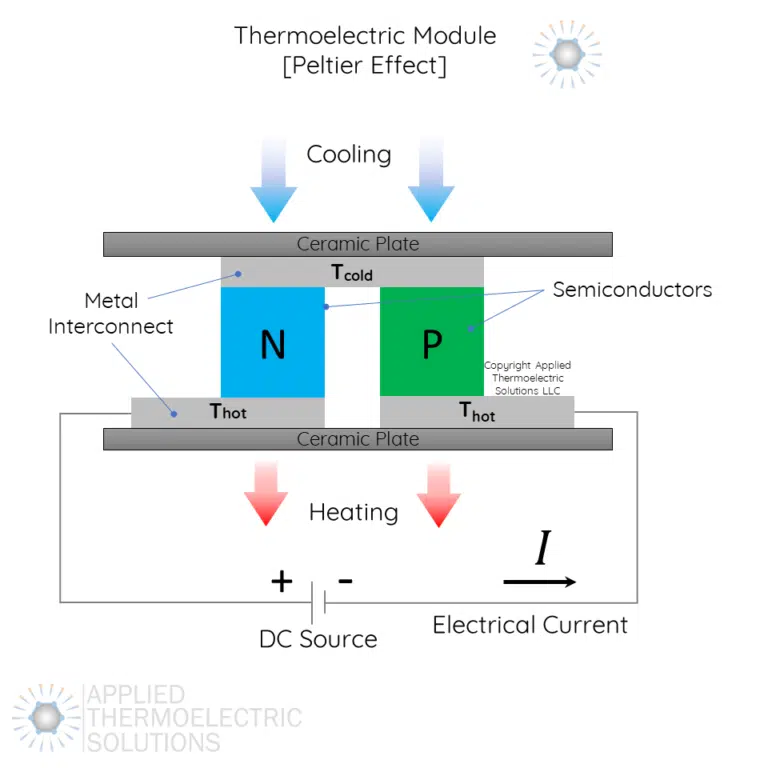
Your Coleman thermoelectric cooler eliminates the need for noisy compressors and environmentally questionable refrigerants by harnessing the Peltier Effect—a physical phenomenon where electricity creates a temperature difference across semiconductor materials. When you power up your cooler, direct current flows through the thermoelectric module, causing one side to absorb heat while the opposite side releases it. This single component functions as an electronic heat pump with no moving parts, making your Coleman cooler remarkably reliable for outdoor adventures.
The heart of this system is a thermoelectric module constructed from multiple semiconductor couples, typically made of bismuth telluride. These couples are arranged in a series circuit between two ceramic plates. As electricity passes through this arrangement, electrons move from a high-energy state to a low-energy state at one junction, absorbing heat in the process, while the reverse happens at the other junction, releasing heat. This continuous electron movement creates the temperature differential that keeps your drinks cold without any mechanical refrigeration cycle.
Why Your Coleman Cooler Can’t Freeze Like a Traditional Fridge
Understanding how does a Coleman thermoelectric cooler work requires recognizing its fundamental temperature limitation: it can typically only achieve a 40-55°F (22-30°C) temperature drop below ambient conditions. If you’re camping on a 90°F day, your Coleman cooler can maintain approximately 40-50°F inside—not cold enough for frozen items but perfect for keeping beverages refreshingly chilled. This limitation exists because thermoelectric cooling efficiency decreases as the temperature difference increases, making deep freezing impractical without significantly more power.
Unlike compressor-based systems that can achieve sub-zero temperatures regardless of outside conditions, your Coleman thermoelectric cooler’s performance directly depends on the surrounding environment. On extremely hot days above 95°F, you’ll notice reduced cooling capacity as the system struggles to reject heat to an already warm environment. This is why you’ll never find ice forming inside your Coleman thermoelectric unit—it’s engineered for chilling, not freezing, making it ideal for food safety without the energy demands of deep refrigeration.
Inside Your Coleman Cooler: Critical Components Working Together

The Thermoelectric Heart: Peltier Module Operation
When you plug in your Coleman cooler, the thermoelectric module immediately begins its heat-pumping work. This solid-state device contains multiple semiconductor couples sandwiched between two aluminum plates—one facing the interior (cold plate) and one facing the exterior (hot plate). As electricity flows through the module, the interior-facing plate actively absorbs heat from your cooler’s contents while the exterior plate becomes significantly warmer.
What makes this system so reliable is its complete lack of moving parts. The semiconductor couples silently transfer heat through electron movement rather than mechanical compression. This design eliminates common failure points found in compressor systems, giving your Coleman thermoelectric cooler exceptional durability for rugged outdoor use. You’ll never experience refrigerant leaks or compressor burnout with this technology—just consistent, quiet cooling as long as power is available.
Heat Management System: Keeping the Hot Side Hot
The hot side of your Coleman thermoelectric cooler requires efficient heat dissipation to maintain cooling performance. This is where the external heat sink and fan system become critical. The heat sink—those finned metal structures on the back or top of your cooler—provides maximum surface area to transfer heat to the surrounding air. Without adequate heat dissipation, the hot side would overheat, reducing cooling efficiency and potentially damaging the system.
Your Coleman cooler’s fan actively pulls air across these fins in a process called forced convection, dramatically improving heat transfer compared to passive cooling alone. You can feel this hot air exhaust when your cooler is running—it’s the warm breeze blowing from the back vents. This continuous heat removal allows the Peltier module to maintain the necessary temperature differential. If you notice reduced cooling performance, check that nothing is blocking these vents—adequate airflow is essential for optimal operation.
Your Step-by-Step Cooling Process Explained
How Heat Moves From Your Drinks to the Outside Air
-
Heat Absorption: The cold plate inside your Coleman cooler draws thermal energy from beverages and food, lowering their temperature through direct contact and air circulation.
-
Electron Heat Transfer: Electricity flowing through the thermoelectric module creates electron movement that carries this absorbed heat across the semiconductor couples to the hot side.
-
Heat Rejection: The external heat sink receives this transferred heat along with waste heat generated by the electrical process itself, becoming significantly warmer than ambient temperature.
-
Air Cooling Cycle: The fan continuously moves air across the heat sink fins, carrying away the heat into the surrounding environment. This cycle repeats as long as power is supplied, maintaining your desired interior temperature.
Why Pre-Chilling Contents Boosts Your Coleman Cooler’s Efficiency
You’ll notice dramatically better performance from your Coleman thermoelectric cooler when you pre-chill contents before loading. Starting with room-temperature items forces the system to work much harder to remove that initial heat load. By placing beverages in a regular refrigerator for several hours before your trip, you reduce the initial cooling demand, allowing your Coleman cooler to maintain temperature rather than achieve it—a much more energy-efficient process.
This strategy becomes especially important when ambient temperatures exceed 85°F. At these higher temperatures, your Coleman thermoelectric cooler’s ability to create a significant temperature differential decreases. Pre-chilled contents mean your cooler spends less energy fighting the initial heat load and more energy maintaining the cold temperature you want. For extended trips, consider freezing water bottles to serve as additional thermal mass that helps stabilize interior temperatures during power interruptions.
Maximizing Your Coleman Thermoelectric Cooler’s Performance
Essential Maintenance for Reliable Cooling
To ensure your Coleman thermoelectric cooler performs optimally throughout its lifespan, implement these critical maintenance practices:
- Clean heat sink fins every 3-6 months using compressed air or a soft brush—dust buildup insulates the fins, dramatically reducing heat dissipation efficiency
- Check door seals quarterly for cracks or warping that allow warm air infiltration—the primary source of cooling load
- Keep ventilation clear by maintaining at least 4 inches of space around the rear heat sink during operation
- Never operate in direct sunlight—position your cooler in shade to reduce ambient temperature around the unit
A blocked heat sink can reduce cooling performance by up to 50%, turning what should be a 40°F temperature drop into just 20°F. This simple maintenance oversight transforms your reliable Coleman cooler into an underperforming appliance that struggles to keep up with basic cooling demands.
Smart Power Management for Extended Trips
Your Coleman thermoelectric cooler typically draws 4-6 amps at 12V DC, consuming 40-70 watts of power—similar to a standard light bulb. Understanding this power draw helps you plan for extended off-grid use. A typical 50 amp-hour car battery can power your cooler for approximately 8-10 hours before risking your vehicle’s ability to start.
For serious off-grid adventures, consider these power optimization strategies:
– Use a dedicated deep-cycle battery rather than your vehicle’s starting battery
– Add a solar panel (100W+) to maintain battery charge during daylight hours
– Set your cooler to the highest acceptable temperature setting (e.g., 45°F instead of 35°F)
– Minimize door openings—each opening introduces warm, moist air that significantly increases cooling load
When Your Coleman Thermoelectric Cooler Shines
Your Coleman cooler excels in scenarios where quiet operation, portability, and reliability matter most. It’s perfect for keeping beverages cold during weekend camping trips, serving as a silent office mini-fridge, or providing supplemental cooling for your boat. Unlike compressor models, it won’t disturb your sleep with cycling noises, and it starts instantly without the high startup current that can trip delicate RV electrical systems.
However, understanding how does a Coleman thermoelectric cooler work reveals its limitations—it’s not designed for freezing food or maintaining very low temperatures in extremely hot conditions. For extended trips in scorching climates or when you need true freezing capability, a compressor-based cooler would serve you better. But for everyday chilling needs where silence and reliability are priorities, your Coleman thermoelectric cooler delivers exceptional performance with minimal maintenance.
By recognizing both the capabilities and limitations of this solid-state cooling technology, you’ll maximize your Coleman cooler’s effectiveness on every adventure. Proper usage, regular maintenance, and realistic expectations ensure you’ll enjoy years of reliable service from this ingenious compressor-free cooling solution.