You wake up to find your driveway mysteriously wet—not oil, but green coolant—with no visible leak. As you start your diesel truck, thick white smoke billows from the exhaust, and the engine runs rougher than ever. This isn’t just an annoyance; it’s your EGR cooler failing, and ignoring it risks hydro-locking your engine within days. A compromised EGR cooler allows coolant to flood combustion chambers, potentially destroying pistons or cylinder heads. In this guide, you’ll learn exactly how to diagnose internal leaks, choose the most cost-effective egr cooler repair method, and implement proven prevention tactics—all without replacing your entire engine. I’ll walk you through the critical visual checks you can do in your driveway and explain why skipping root-cause fixes guarantees repeat failures.
Why Your EGR Cooler Cracked: Soot, Corrosion & Coolant Contamination
How Exhaust Soot Clogs and Shatters Coolers from Inside
Your EGR cooler’s narrow cooling tubes act like a filter for exhaust gases, trapping soot over time. As carbon deposits build up—especially with frequent short trips or poor fuel quality—they restrict gas flow, forcing exhaust through weaker tube sections. This creates hotspots that crack the metal, allowing coolant to leak directly into your intake manifold. Ford 6.0L Powerstroke owners often see this after 120,000 miles when soot thickens like tar inside the cooler core. You’ll notice reduced engine power during acceleration as backpressure spikes, signaling it’s time for egr cooler repair before catastrophic failure.
Corrosion From Coolant Mix-Ups and Thermal Stress
Mixing incompatible coolants (like OAT and IAT formulas) creates acidic sludge that eats through aluminum cooler housings. Combined with extreme temperature swings—from 1,400°F exhaust gases to 195°F coolant—the metal fatigues rapidly. On Cummins engines, this causes pinhole leaks where coolant seeps into exhaust ports, visible as rust-colored streaks around the cooler’s weld points. If you’ve neglected coolant flushes beyond the 150,000-mile interval, internal corrosion is likely accelerating your failure.
5 Urgent EGR Cooler Failure Signs You Can’t Ignore
White Smoke on Cold Starts and Coolant Disappearing Overnight
Thick white exhaust smoke that smells sweet (like antifreeze) during startup means coolant is burning in cylinders—a dead giveaway for internal leaks. Simultaneously, check your overflow tank: if coolant vanishes without external drips, it’s being sucked into the intake. For a quick test, drain coolant into a clear jar; black, oily residue confirms soot-contaminated coolant from a ruptured EGR core. Ignoring this risks hydro-lock within weeks.
Rough Idling, Power Loss, and Overheating Clues
A failing cooler disrupts the critical air-fuel balance, causing misfires at idle and sluggish acceleration. You might also see overheating warnings even with full coolant levels—because the clogged cooler can’t regulate exhaust temperatures properly. On Duramax engines, this often triggers P0401 (insufficient EGR flow) codes. If your truck hesitates like it’s “running out of air” uphill, your egr cooler repair window is closing fast.
Diagnose Your Leaking EGR Cooler in 20 Minutes (No Special Tools)
Pressure Test and Block Test Confirmation Steps
Start with a cold engine. Remove the radiator cap and pressurize the cooling system to 15 PSI using a hand pump. If bubbles erupt into the coolant reservoir, exhaust gases are leaking past the cooler core. Next, perform a block test: fill the tester’s tube with blue fluid, run the engine for 2 minutes, and observe color changes. Green fluid means combustion gases are contaminating coolant—a 100% confirmation of EGR cooler failure requiring immediate egr cooler repair. Skip this step, and you risk misdiagnosing a head gasket issue.
Soot Check and Leak Inspection Shortcuts
Drain 4 ounces of coolant into a white container. Swirl it gently; any gray or black film indicates soot intrusion from the EGR system. Then, inspect the cooler’s mounting surface near the intake manifold for wet spots or crusty white deposits—these reveal external seepage points. For Ford Powerstrokes, focus on the cooler’s upper hose connections; corrosion here causes 70% of leaks.
EGR Cooler Repair Options: Cost Breakdown and Longevity Comparison
Why Cleaning Alone Fails for Cracked Cores
Chemical cleaning removes surface soot but can’t fix pinhole leaks or cracks. Shops soak coolers in industrial solvents, but this only buys 3–6 months before corrosion spreads. If your pressure test showed bubbles, cleaning is wasted money—it’s like patching a burst pipe with tape. Reserve this for mild clogs with zero coolant loss, and always follow with a root-cause fix.
Remanufactured Units: 90% Cheaper Than OEM With Full Warranty
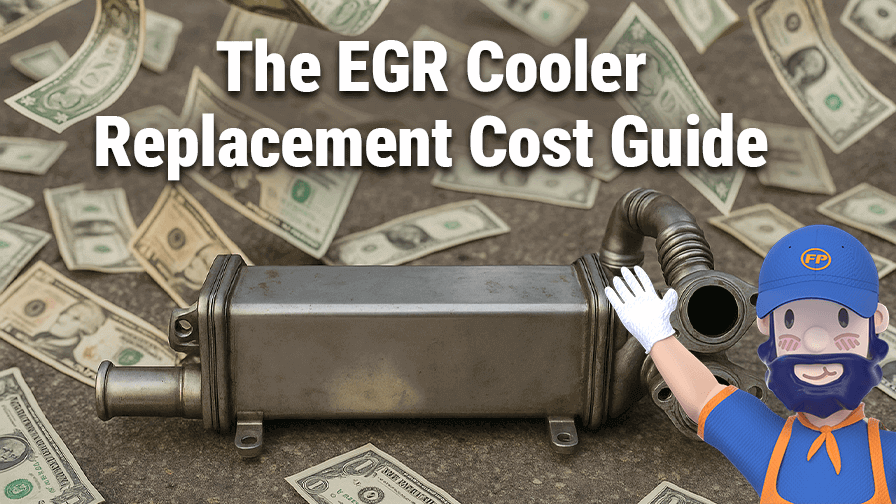
This is the smart egr cooler repair choice for most owners. Reputable shops disassemble your core, blast-clean tubes, replace all gaskets/seals, and install a new OEM-spec core. You get a “like-new” unit for $300–$500 (versus $1,200+ for new OEM) with a 2-year warranty. For Cummins 6.7L engines, this avoids the $2,000+ dealer replacement cost. Crucially, they pressure-test each unit—something DIY rebuild kits skip, causing 40% of repeat failures.
Step-by-Step EGR Cooler Replacement: Avoid These 3 Costly Mistakes
Mistake #1: Skipping Intake Manifold Cleaning (Causes Immediate Re-Failure)
After removing the cooler, inspect the intake manifold ports. If black soot cakes the walls, use a brass brush (never steel—it scratches aluminum) to clean passages. Left uncleared, this debris will clog your new cooler in weeks. Ford 6.4L owners: pay special attention to the EGR valve seat—it traps gunk that flows backward into the cooler.
Mistake #2: Reusing Old Gaskets or Incorrect Torque
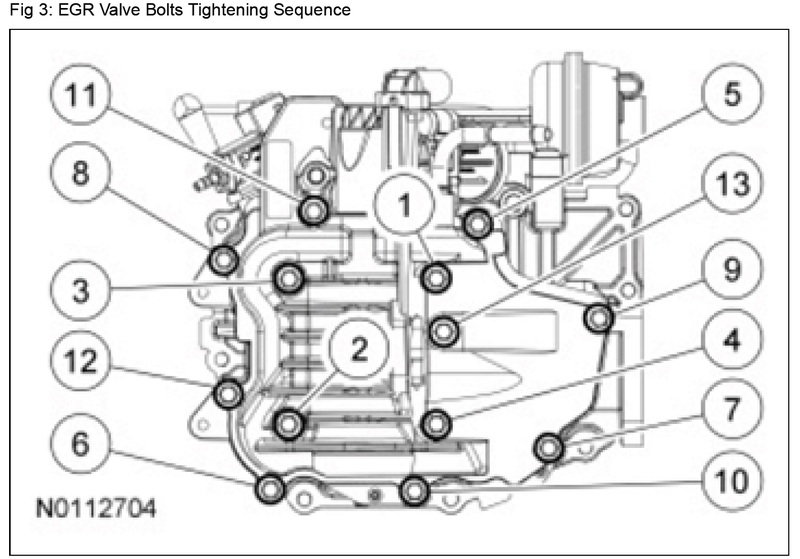
Always install new multi-layer steel gaskets. Hand-tighten bolts in a star pattern, then torque to spec (typically 18–22 ft-lbs for Duramax). Over-torquing cracks aluminum mounting surfaces; under-torquing causes leaks. Use a torque wrench—guessing here wastes $200 in coolant and labor.
Mistake #3: Not Bleeding Air From the Cooling System
After refilling coolant, run the engine with the radiator cap off until the thermostat opens (195°F+). Squeeze upper radiator hoses to purge air pockets. If you skip this, air locks prevent proper coolant circulation, causing overheating that destroys your new cooler. For Powerstrokes, cycle the heater from cold to hot 3 times to clear trapped air.
Prevent Repeat EGR Cooler Failures: 4 Non-Negotiable Maintenance Steps

Flush Coolant Every 100,000 Miles With OEM-Approved Formula
Mix only manufacturer-specified coolant (e.g., Ford WSS-M97B57-A2) with distilled water at 50/50. Aftermarket “universal” coolants corrode cooler tubes faster. Use a flush machine to remove acidic sludge—never just drain and refill. This single step extends cooler life by 50,000+ miles.
Fix Clogged DPFs and Stuck EGR Valves Immediately
A restricted diesel particulate filter (DPF) forces soot-laden exhaust through the EGR system at higher pressure, overwhelming the cooler. If your truck enters “limp mode” frequently, clean the DPF before tackling egr cooler repair. Similarly, replace sticky EGR valves—they cause uneven exhaust flow that erodes cooler tubes.
When to Call a Professional for EGR Cooler Repairs
If you spot coolant in your oil (milky residue on the dipstick) or hear piston-knock sounds, stop driving immediately. These indicate hydro-lock damage requiring engine disassembly—far beyond DIY egr cooler repair. Similarly, if your cooler’s mounting surface on the intake manifold is cracked (common on GM 6.6L Duramax), you need a machine shop to weld or replace the $800 manifold. For clean replacements on Ford Powerstrokes, a pro takes 4 hours versus 8+ for DIY due to tricky bolt access.
Final Checklist for a Permanent EGR Cooler Repair
Your egr cooler repair succeeds only if you address the root cause. After installing a remanufactured unit:
– ✅ Verify DPF regeneration cycles complete fully
– ✅ Confirm EGR valve moves smoothly with a scan tool
– ✅ Use only OEM coolant with a corrosion inhibitor
– ✅ Drive at highway speeds weekly to prevent soot buildup
Ignoring these guarantees repeat failure within 12 months. A properly executed egr cooler repair costs under $600 and lasts 150,000 miles—but cutting corners risks $5,000 engine repairs. If white smoke persists after replacement, recheck for air pockets in the cooling system; trapped air mimics leak symptoms. For ongoing prevention, add a diesel-specific fuel additive like Hot Shot’s Secret to reduce soot by 30% at every fill-up. Your engine’s longevity hinges on treating the EGR cooler not as a disposable part, but as a critical component in your diesel’s health ecosystem.