Your commercial walk-in cooler suddenly stops maintaining proper temperatures, and perishable inventory is at risk. Within hours, you could face thousands in spoiled product, health code violations, and lost business. Understanding commercial walk-in cooler repair is essential for restaurant owners, grocery managers, and food service operators who rely on consistent refrigeration to protect their bottom line and comply with health regulations.
When your walk-in cooler fails, every minute counts. The refrigeration system’s complex components—from compressors to control boards—require specialized knowledge to diagnose and repair correctly. Attempting DIY fixes without proper training often leads to more damage, voided warranties, and extended downtime. Professional commercial walk-in cooler repair services combine emergency response with preventative strategies to minimize operational disruption while addressing the root cause of failures.
Why Your Walk-In Cooler Loses Temperature Control
Thermostat and Control Board Failures That Trigger Emergency Alerts
When your walk-in cooler can’t maintain proper temperatures, thermostat malfunctions are often the first culprit. A faulty thermostat might display incorrect readings or fail to signal the refrigeration system to activate. In critical situations, this means your temperature monitoring system won’t trigger emergency alerts when conditions become unsafe for food storage.
Diagnosing Control System Issues
Listen for unusual sounds from the control panel or check for error codes on digital displays. If the thermostat display is blank, verify power at the main disconnect before assuming component failure. Modern systems often feature diagnostic LEDs that technicians can interpret using manufacturer service manuals to pinpoint whether the issue lies with the thermostat itself or the control board.
Defrost System Failures Causing Ice Buildup on Evaporator Coils
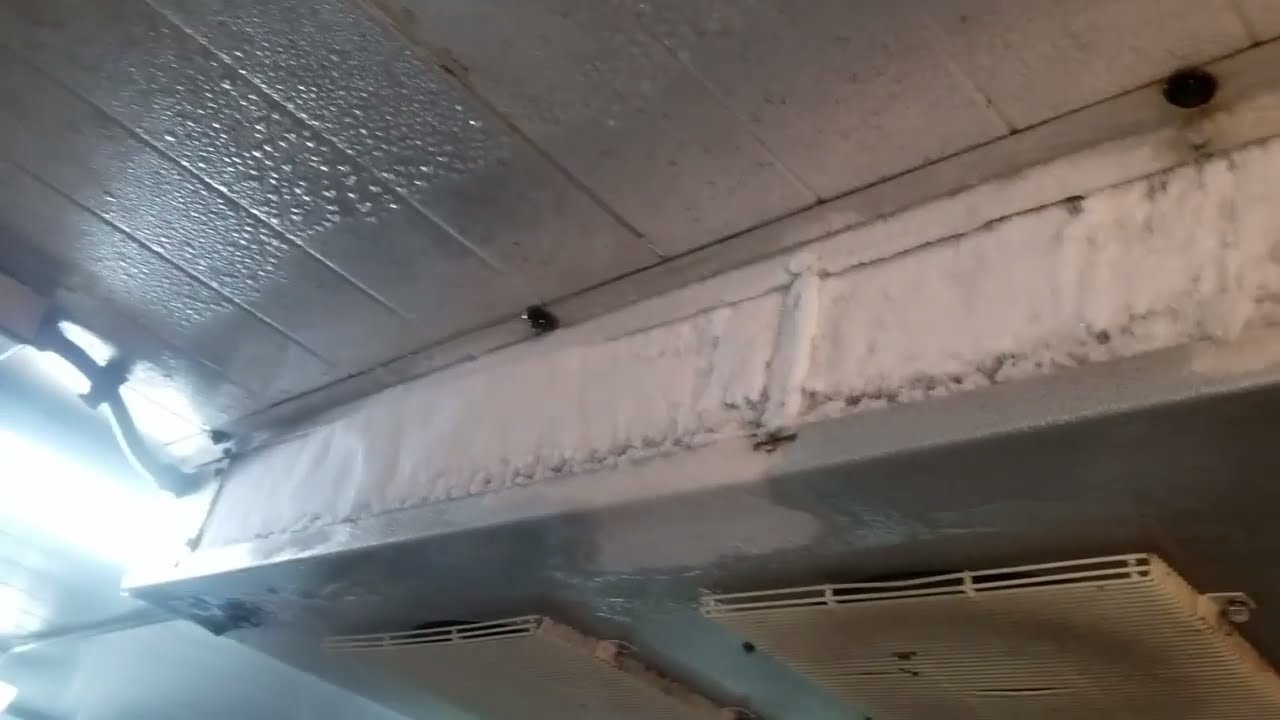
Excessive frost accumulating on evaporator coils indicates a defrost system failure, one of the most common commercial walk-in cooler repair scenarios. When the defrost heater, defrost thermostat, or termination sensor malfunctions, ice builds up on coils, restricting airflow and reducing cooling efficiency until the system completely fails.
Critical Defrost Components to Check
Inspect the defrost heater elements for continuity using a multimeter. Test the defrost thermostat by warming it with your hand—if it doesn’t click open when heated, it needs replacement. The defrost termination sensor must accurately detect when ice has melted; if stuck in “defrost mode,” it can cause overheating during the cooling cycle.
Emergency Response Procedures for Critical Failures
Immediate Actions When Your Cooler Temperature Rises Above 40°F
When your walk-in cooler temperature climbs above safe food storage levels, follow this emergency protocol: First, move critical inventory to temporary cooling solutions if available. Then check basic operational elements—power supply, circuit breakers, and emergency shutoff switches—before assuming major component failure.
Professional Emergency Response Timeline
Reputable commercial walk-in cooler repair services offer guaranteed same-day response for critical failures, with average 2-hour arrival times for food safety emergencies. Technicians bring specialized diagnostic equipment including electronic refrigerant leak detectors, manifold gauge sets, and thermal imaging cameras to quickly identify the root cause rather than replacing parts randomly.
When to Call Professionals vs. Handling In-House Maintenance
While staff can perform basic maintenance like cleaning condenser coils and checking door seals, certain failures require certified technicians. Any refrigerant handling demands EPA 608-certified professionals due to environmental regulations. Compressor issues, electrical faults beyond simple breaker resets, and complex control system problems should never be attempted without proper training and equipment.
Critical Repairs Requiring Professional Intervention
– Refrigerant leaks requiring evacuation and recharging
– Compressor diagnostics and replacement
– Control board circuitry repair
– Electrical system modifications
– Defrost timer calibration and replacement
Essential Maintenance Procedures That Prevent Costly Breakdowns
Coil Cleaning Methods That Restore 30% Cooling Efficiency
Dirty condenser coils force your refrigeration system to work significantly harder, increasing energy consumption and shortening component lifespan. For walk-in coolers with roof-mounted condensers, regular cleaning is critical as these units collect debris, leaves, and urban pollutants that restrict airflow.
Proper Coil Maintenance Protocol
Turn off power to the unit before cleaning. Use a non-caustic coil cleaner and soft brush to remove buildup, working from the clean side toward the dirty side to avoid pushing debris deeper. For evaporator coils inside the cooler, check for ice buildup that indicates defrost system problems—never attempt to chip ice off coils as this damages delicate fins.
Door Seal Replacement That Eliminates $500 Monthly Energy Waste

Faulty door gaskets represent one of the most expensive yet simplest commercial walk-in cooler repair issues to address. A compromised seal allows warm, moist air to enter the cooler, forcing the system to work harder while causing excess frost buildup. This single issue can increase energy costs by hundreds of dollars monthly while risking temperature fluctuations that compromise food safety.
Step-by-Step Gasket Replacement
1. Carefully remove the old gasket by loosening mounting screws or prying out from the channel
2. Thoroughly clean the gasket channel of debris and old adhesive
3. Apply manufacturer-recommended adhesive to the channel
4. Start installation at hinge points, working toward the latch
5. Ensure the gasket creates a continuous seal with no gaps when door closes
6. Allow adhesive to cure completely before closing the door
Smart Investment Decisions: Repair vs. Replace Calculations
The 50% Rule for Walk-In Cooler Component Replacement
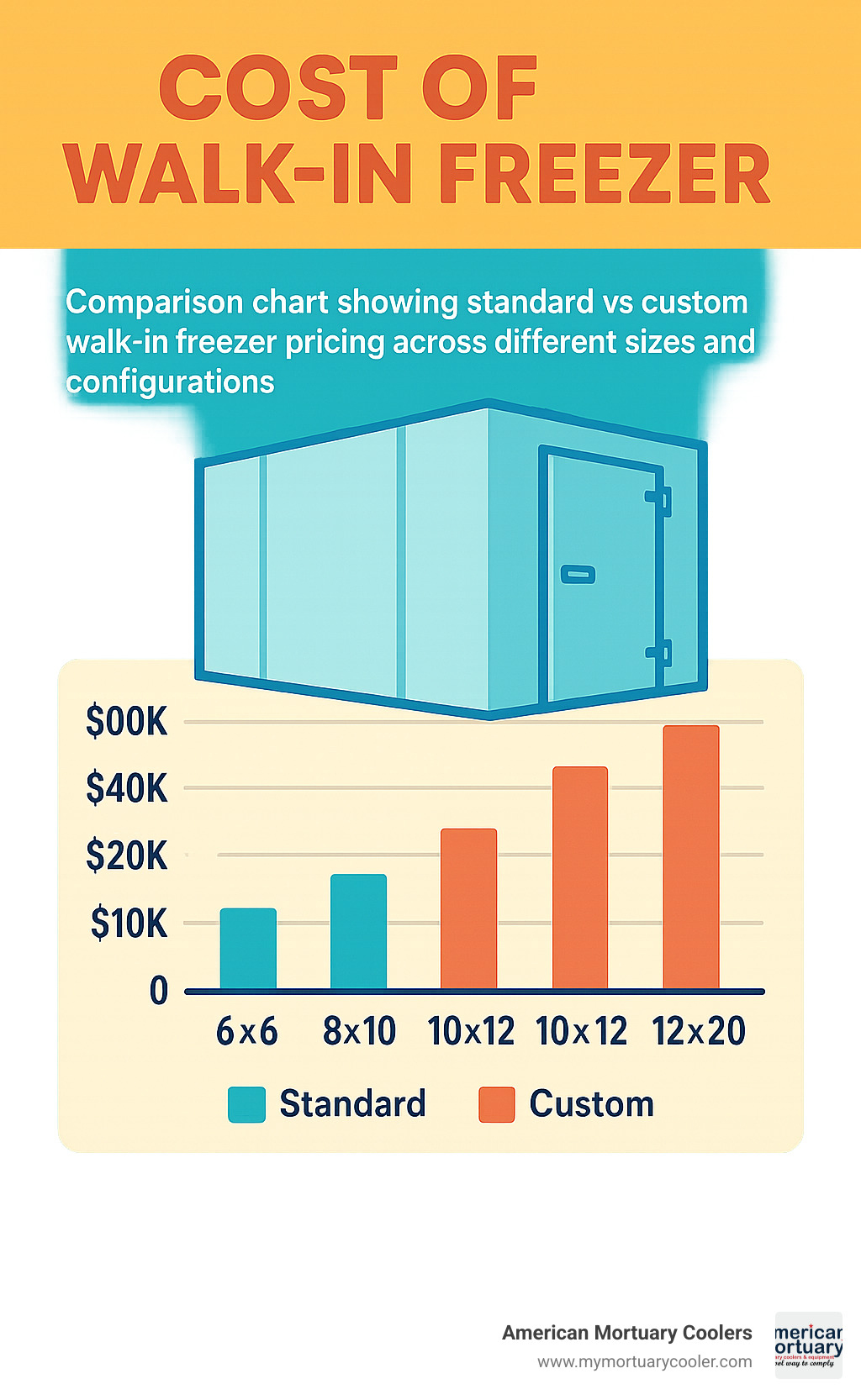
When facing major repairs, apply the 50% rule: If the repair cost exceeds 50% of a new unit’s price, replacement becomes financially prudent. However, for newer high-quality units still under warranty, repairs often make better economic sense. Consider the unit’s age—most commercial walk-in coolers last 15-20 years with proper maintenance.
Energy Efficiency Upgrade Opportunities
Older units consume significantly more energy than modern systems. When repairing or replacing components, consider high-efficiency upgrades like variable speed compressors, LED lighting retrofits, and smart thermostat systems. These improvements often qualify for utility rebates while reducing operating costs by 20-30%, providing rapid return on investment.
Preventative Maintenance Schedules That Avoid Emergency Calls
Daily and Weekly Checks That Prevent 70% of Failures
Implementing a structured maintenance program prevents most emergency commercial walk-in cooler repair situations. Train staff to perform these critical daily checks: Listen for unusual compressor noises (knocking or grinding indicates bearing failure), verify door seals close tightly, and confirm temperature readings match set points.
Weekly Maintenance Protocol
– Clean condenser coils using appropriate non-corrosive cleaners
– Inspect door gaskets for cracks, tears, or compression damage
– Verify automatic door closers function properly
– Check evaporator coil for ice buildup indicating defrost issues
– Test emergency lighting and alarm systems
Professional Maintenance Plans That Extend Equipment Lifespan
Schedule professional maintenance at least quarterly for comprehensive system evaluation. Certified technicians perform deep diagnostics including refrigerant pressure testing, electrical load analysis, and insulation integrity checks that untrained staff cannot perform. These visits catch developing problems before they cause catastrophic failure.
What Professional Maintenance Includes
– Complete refrigerant system analysis with manifold gauges
– Electrical component testing for voltage drops and resistance
– Defrost system timing and component verification
– Door alignment and seal integrity assessment
– Energy consumption benchmarking against industry standards
Advanced Monitoring Systems That Prevent Temperature Excursions
Remote Monitoring Technology That Alerts Before Inventory Is at Risk
Modern commercial walk-in coolers integrate smart monitoring systems that send real-time alerts to your smartphone when temperatures approach unsafe levels. These systems track door openings, energy consumption patterns, and equipment runtime to predict failures before they occur—transforming reactive commercial walk-in cooler repair into proactive maintenance.
Key Benefits of Smart Monitoring
– Immediate notifications for temperature deviations
– Historical data tracking for identifying developing issues
– Energy usage analytics to optimize performance
– Remote diagnostics capabilities that reduce service call duration
– Compliance documentation for health inspections
When your commercial walk-in cooler fails, the right repair strategy balances immediate restoration of function with long-term reliability. Partner with service providers who offer both emergency response and structured preventative maintenance programs to protect your inventory, comply with health regulations, and maximize equipment lifespan. Remember that regular coil cleaning, door seal maintenance, and professional diagnostics prevent 80% of emergency failures—making scheduled maintenance the most cost-effective commercial walk-in cooler repair strategy available.