
That annoying gap where cold air escapes from your walk-in cooler isn’t just wasting energy—it’s threatening your food safety compliance and inflating your monthly utility bills. When your cooler door fails to seal properly, your refrigeration system works overtime, temperatures fluctuate dangerously, and compressor wear accelerates. This comprehensive cooler door repair guide delivers actionable solutions for facility managers and technicians to diagnose, fix, and prevent door-related failures before they compromise your operation. You’ll learn exactly when to repair versus replace, master critical DIY fixes, and implement maintenance protocols that extend door life by years.
Why Your Walk-In Cooler Door Won’t Seal Properly
A failing cooler door manifests through specific, observable symptoms that demand immediate attention. The most common culprit is gasket deterioration—those flexible rubber seals lose elasticity over time, developing cracks and hard spots that create invisible gaps for cold air to escape. Perform the dollar bill test: close the bill in various door locations and try to pull it out. If it slides free without resistance, your gasket has failed. Hinge misalignment causes another prevalent issue, often from heavy door slamming or improper installation. When hinges wear or loosen, the door sags slightly, preventing full contact with the frame and creating a persistent cold air leak along one edge.
Threshold damage from forklift impacts or dropped equipment creates another critical failure point. The metal sill at the door’s base must sit perfectly level with the bottom seal. Even a 1/8-inch gap here allows significant air infiltration, especially in freezers where frost quickly builds at the leak point. Latch mechanism failure completes the top three issues—when the latch doesn’t fully engage or the strike plate has shifted, the door never compresses the gasket adequately, creating a major energy drain you’ll see reflected in your next utility bill.
How to Diagnose Your Specific Door Problem
Is your door sagging on one side? Check for visible gaps between the door edge and frame when closed. Use a level across the top—if it’s not perfectly horizontal, hinge adjustment or replacement is needed. Inspect hinge pins for visible wear or rust, which indicates they’re no longer supporting the door’s weight properly.
Does frost accumulate at the door bottom? This almost always indicates threshold damage or misalignment. Measure the gap between the bottom seal and floor with a feeler gauge—anything over 1/16 inch requires correction. Look for dents or bends in the threshold metal where forklifts have impacted it.
Is the door difficult to close fully? Test the latch mechanism by manually engaging it while observing the gasket compression. If you must force the door shut to get the latch to catch, your hinges are likely out of alignment or the strike plate has shifted position. The gasket should compress smoothly with gentle pressure before the latch engages.
Immediate Fixes for Common Cooler Door Failures
Replacing a Failed Door Gasket in 5 Steps

-
Remove the old gasket by carefully prying it from its channel using a flathead screwdriver—start at the top center and work outward to avoid stretching the remaining material. For adhesive-backed gaskets, use a plastic scraper to lift the edge before pulling.
-
Clean the channel thoroughly with isopropyl alcohol and a lint-free cloth to remove all old adhesive residue and grease. The surface must be completely dry before installing the new gasket.
-
Dry-fit the new gasket by pressing it into the channel without adhesive to verify proper sizing. Trim any excess material at the corners using sharp utility knife for a seamless joint.
-
Apply gasket adhesive in 12-inch sections, pressing the gasket firmly into place as you go. Use a rubber roller to ensure full contact and eliminate air pockets along the entire length.
-
Allow 24 hours for curing before closing the door. Test the seal using the dollar bill method at multiple points around the perimeter—properly installed gaskets should hold the bill firmly in place.
Adjusting Misaligned Hinges Without Professional Help
When your door sags or won’t close flush, hinge adjustment often solves the problem. First, identify which hinge needs correction by checking gaps around the door perimeter. Loosen (but don’t remove) the hinge mounting screws slightly, then tap the hinge up or down with a rubber mallet as needed. For continuous hinges, adjust the tension screws at each end while checking door alignment with a level. Retighten all screws gradually while verifying the door moves smoothly through its full range. If hinge pins show visible wear, replace them with stainless steel versions rated for 500+ pound loads.
When to Replace Your Entire Cooler Door System
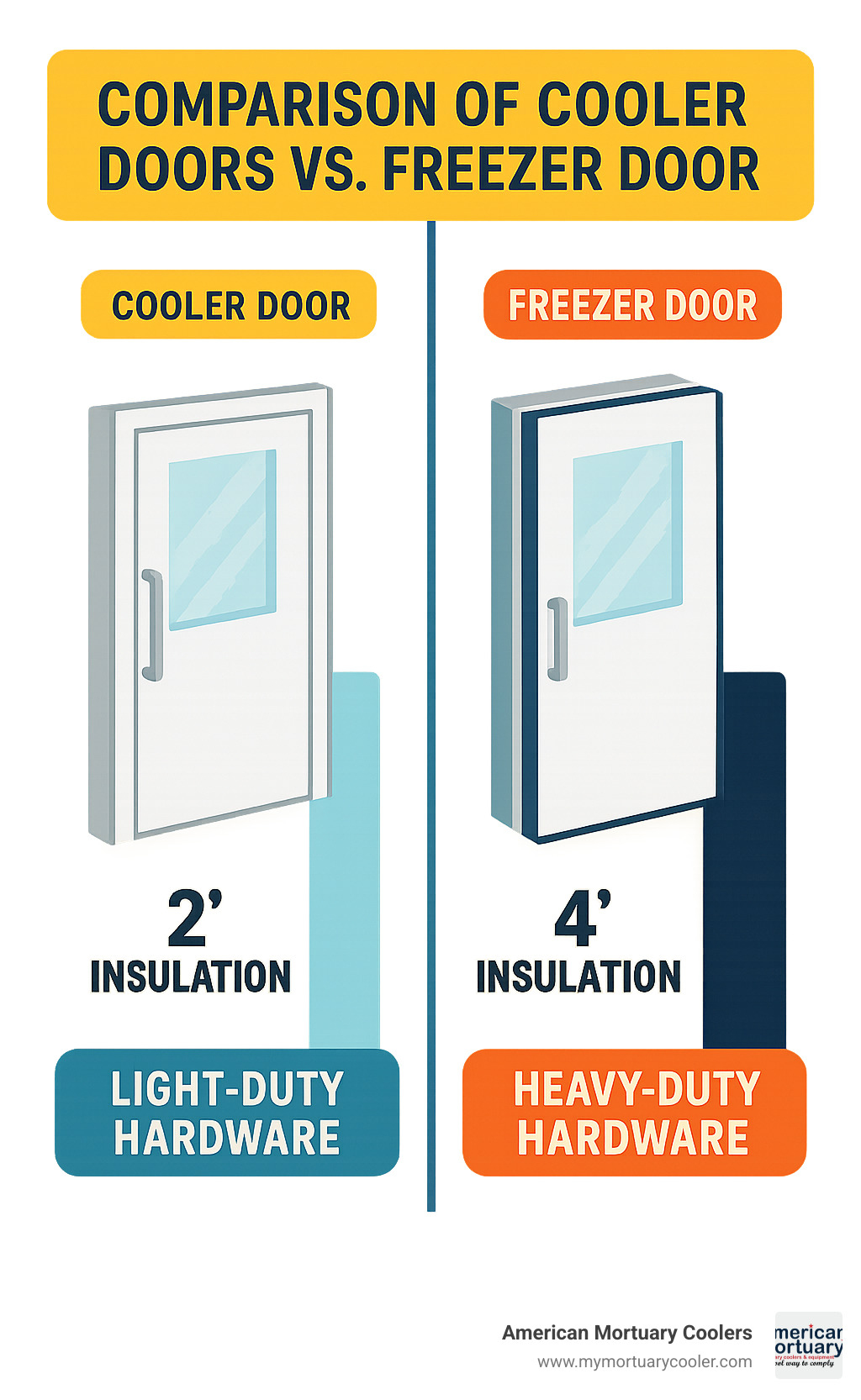
Surface-Mount Door Replacement: Your Most Cost-Effective Option

If your door frame remains structurally sound but the door itself is damaged beyond repair, a surface-mount replacement offers the fastest, most economical solution. These pre-engineered doors mount directly over your existing opening with standardized dimensions—common widths include 30″, 36″, and 48″, with heights typically 78″ or 84″. The installation process takes 2-4 hours with two technicians and requires minimal disruption to your operation. Key features to specify include:
- Right-hand or left-hand swing matching your traffic flow
- 1/8″ thick aluminum kickplates for impact protection
- 14″x24″ polycarbonate viewports for inventory visibility
- Stainless steel hinges rated for commercial use
A properly installed surface-mount door creates an airtight seal that reduces energy consumption by 15-25% immediately. The investment typically pays back through energy savings within 18-24 months for high-usage facilities.
Prevent Costly Breakdowns With Proactive Maintenance
Critical Monthly Door Inspections You Can’t Skip
Check gasket integrity by running your fingers along the entire seal while the door is closed. Feel for gaps, hard spots, or sections that don’t compress evenly. Clean gaskets monthly with mild soap and water—never use petroleum-based cleaners that degrade rubber.
Verify door alignment using a 4-foot level on both vertical and horizontal planes. A properly aligned door shows no more than 1/16-inch deviation across its surface. Check hinge bolts for tightness and apply food-grade silicone lubricant to all moving parts quarterly.
Test the latch mechanism by closing the door gently—it should engage with minimal pressure and create an audible “whoosh” as the seal compresses. If you must slam the door to latch it, immediate adjustment is required to prevent further damage.
Annual Professional Service Checklist
Schedule a certified technician for comprehensive door system evaluation annually. They should:
- Measure door alignment with precision tools
- Test gasket compression force with calibrated gauges
- Inspect threshold integrity and levelness
- Verify proper operation of all safety mechanisms
- Check refrigeration system performance impact
This professional assessment catches developing issues before they cause catastrophic failures, extending your door system’s lifespan by 3-5 years on average.
Cost Analysis: Repair vs. Replacement Decisions That Save Money
Gasket replacement costs $100-$400 for DIY or $250-$600 professionally, typically paying for itself in 6-12 months through reduced energy consumption. Hinge repair ranges from $150-$600 depending on complexity. Full door replacement with a quality surface-mount unit costs $1,200-$4,000 installed but delivers immediate 15-25% energy savings—translating to $100-$300 monthly savings for a typical 8’x10′ cooler.
Warning: Attempting complex repairs without proper tools or expertise often leads to further damage. If your door frame shows structural damage, panels feel “soggy” (indicating insulation failure), or you can’t achieve proper alignment after multiple adjustments, call a professional immediately. A botched DIY repair that compromises your door seal can cost thousands in spoiled inventory alone.
A properly maintained cooler door system should last 10-15 years in commercial settings. By implementing these repair techniques and maintenance protocols, you’ll prevent 80% of common door failures while maximizing energy efficiency. Remember that every degree of temperature fluctuation increases food spoilage risk by 10%—making door integrity a critical food safety issue, not just an energy concern. Address minor issues immediately before they escalate, and schedule professional assessments annually to catch developing problems early. Your bottom line—and your customers’ safety—depend on it.