
Nothing ruins a refreshing swim faster than stepping into a pool that feels more like a hot tub. As temperatures climb above 90°F, your backyard oasis can quickly become an uncomfortably warm bath, especially in regions with intense summer heat. While pool heaters are common, many homeowners don’t realize pool coolers exist to solve the opposite problem. But exactly how does a pool cooler work to transform that lukewarm water into a refreshing escape? Understanding this technology isn’t just interesting—it’s essential if you’re considering installation or troubleshooting cooling issues.
Unlike what many assume, pool coolers don’t “add cold” to your water. Instead, they employ fundamental physics principles to extract heat, lowering your pool’s temperature to that perfect 78-82°F sweet spot. Whether you’re battling scorching Arizona summers or humid Florida afternoons, knowing how these systems operate helps you choose the right solution and maximize its efficiency. In this guide, we’ll break down the mechanics of different cooling technologies, reveal which system works best for your climate, and explain exactly what happens when you flip that “cool” switch on your pool equipment.
Why Standard Pool Pumps Can’t Cool Your Water Alone
Your existing pool circulation system keeps water clean but actually contributes to warming your pool. As water passes through the filter and pump, friction generates heat—adding 1-2°F daily in hot weather. Meanwhile, direct sunlight delivers approximately 200-300 BTUs of heat per square foot of pool surface. Without intervention, your pool temperature can rise 3-5°F daily during peak summer, making traditional filtration insufficient for temperature control.
The Critical Difference Between Heating and Cooling Systems
Pool heaters work by transferring external heat into your water, but how does a pool cooler work differently? Cooling systems reverse this process—they extract heat from pool water and expel it into the surrounding environment. This fundamental distinction explains why you can’t simply run a standard heat pump in reverse without specialized components designed for temperature reduction.
When You Actually Need a Dedicated Cooling System
Most pool owners consider cooling solutions when water exceeds 85°F consistently. At this temperature:
– Swimming becomes less refreshing and more fatiguing
– Chemical consumption increases by up to 50% as sanitizers break down faster
– Algae growth accelerates in warmer water
– Equipment stress increases due to thermal expansion
If your pool regularly hits 88°F or higher, a dedicated cooling system becomes a comfort necessity rather than a luxury.
Refrigerant-Based Pool Chillers: Air Conditioning for Your Water

The most powerful residential cooling option functions almost identically to your home’s air conditioning system, but designed specifically for water temperature control. When you ask how does a pool cooler work with refrigerant technology, the answer involves a sophisticated heat transfer process.
Step-by-Step Chiller Operation
- Water Diversion: Your pool’s circulation pump sends warm water (typically 85-95°F) through dedicated plumbing to the chiller unit
- Heat Exchange: Water flows through a titanium heat exchanger coil while refrigerant circulates in the opposite direction
- Temperature Transfer: The refrigerant (usually R-410A) absorbs heat from the water at approximately 15-20°F below ambient temperature
- Compression Cycle: The compressor pressurizes the now-warm refrigerant gas, raising its temperature significantly
- Heat Expulsion: The condenser fan blows ambient air across the hot refrigerant coils, releasing heat into the atmosphere
- Expansion & Reset: The refrigerant passes through an expansion valve, cooling it dramatically to restart the cycle
Real-World Cooling Performance
A properly sized chiller can lower pool temperature by 15-20°F below ambient air temperature. For example, with 100°F daytime highs, your pool could maintain a refreshing 80-85°F. Most residential units provide 25,000-150,000 BTU/hour of cooling capacity, with recovery rates of 1-2°F per hour for average-sized pools.
Evaporative Cooling Towers: Harnessing Nature’s Air Conditioning
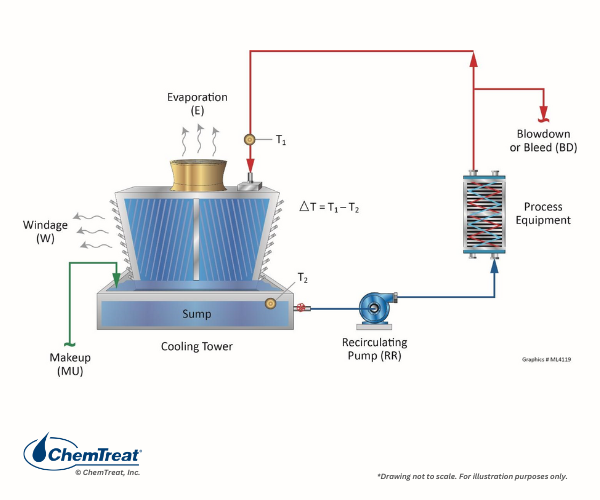
In dry climates, evaporative cooling towers provide an energy-efficient alternative to refrigerant systems. Understanding how does a pool cooler work through evaporation reveals why these systems dominate in places like Arizona and Nevada.
The Evaporation Cooling Process Explained
- Water Distribution: Pool water is pumped to the top of the cooling tower
- Surface Maximization: Water cascades down through specially designed “fill” material that creates thin films of water
- Air Movement: Industrial fans pull ambient air upward through the falling water
- Heat Transfer: As water evaporates, it absorbs heat energy from the remaining water (latent heat of vaporization)
- Temperature Reduction: Each pound of evaporated water removes approximately 1,000 BTUs of heat
- Collection & Return: Cooled water collects in a basin and returns to your pool
Climate Limitations You Must Consider
These systems work best when:
– Relative humidity stays below 50%
– There’s consistent airflow (natural or fan-generated)
– Ambient temperatures exceed 85°F
In humid conditions (above 60% RH), evaporative efficiency drops significantly—sometimes to just 2-3°F of cooling. For every 10% increase in humidity, cooling effectiveness decreases by approximately 25%.
Dual-Purpose Heat Pumps: Year-Round Temperature Control
Many modern pool owners opt for reversible heat pumps that both heat and cool, making them the most versatile solution for regions with distinct seasons. When exploring how does a pool cooler work in these hybrid systems, the key is a simple mechanical reversal.
The Reversing Valve Mechanism
- Mode Selection: Your control system activates the reversing valve
- Refrigerant Flow Reversal: The valve redirects refrigerant flow through the system
- Role Reversal: The evaporator becomes the condenser and vice versa
- Heat Transfer Direction: Instead of pulling heat from air to warm water, the system pulls heat from water to cool it
Energy Efficiency Comparison
| System Type | Cooling Efficiency (COP) | Best Climate Conditions |
|---|---|---|
| Refrigerant Chiller | 3.0-4.5 | All climates, especially humid |
| Evaporative Tower | 5.0-8.0 | Dry climates (<50% humidity) |
| Reversible Heat Pump | 4.0-5.5 | Mild to warm climates |
Reversible heat pumps typically use 30-50% less electricity than dedicated chillers while providing comparable cooling performance in suitable conditions.
Choosing Your Optimal Cooling System
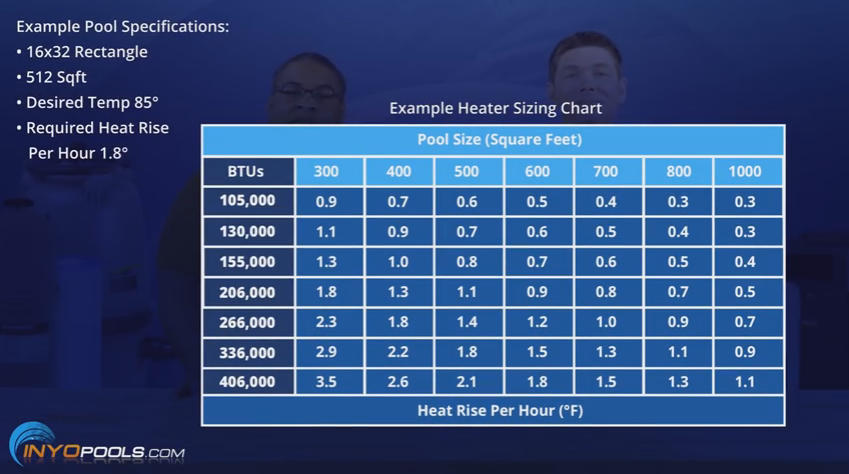
Selecting the right technology depends on specific factors that directly impact both performance and operating costs. When determining how does a pool cooler work for your specific situation, consider these critical decision points.
Pool Size and Cooling Capacity Requirements
Manufacturers rate cooling systems in BTUs (British Thermal Units), with general sizing guidelines:
– Small pools (10,000 gallons): 30,000-60,000 BTU system
– Medium pools (15,000-20,000 gallons): 60,000-100,000 BTU system
– Large pools (25,000+ gallons): 100,000-150,000+ BTU system
Undersized systems will run continuously without reaching target temperatures, while oversized units short-cycle, reducing efficiency and lifespan.
Climate-Specific Performance Considerations
- Hot & Dry Climates (Phoenix, Las Vegas): Evaporative towers work exceptionally well, often providing sufficient cooling at half the operating cost of refrigerant systems
- Hot & Humid Climates (Miami, Houston): Refrigerant-based chillers or reversible heat pumps perform best as evaporative efficiency plummets
- Mild Climate with Seasonal Needs (Los Angeles, Atlanta): Reversible heat pumps offer the best year-round value
Installation Requirements You Can’t Ignore
All cooling systems require:
– Dedicated electrical circuit (230V for most residential units)
– Proper drainage for condensate or bleed-off water
– Minimum 3 feet of clearance around unit for airflow
– Integration with existing pool plumbing (typically bypass configuration)
– Professional refrigerant handling certification for chiller installation
Maintenance Must-Dos for Reliable Cooling Performance
Even the best system fails prematurely without proper care. Understanding how does a pool cooler work includes knowing what maintenance keeps it running efficiently.
Monthly Maintenance Checklist
- Inspect and clean air filters on chiller units (dirty filters reduce efficiency by up to 30%)
- Check water flow rate to ensure proper heat exchange
- Verify refrigerant levels (low refrigerant causes poor cooling and compressor damage)
- Clean evaporator coils of debris and mineral buildup
- Examine electrical connections for corrosion or wear
Seasonal Deep Cleaning Procedures
Before peak cooling season:
1. Remove and clean the heat exchanger with manufacturer-approved descaling solution
2. Inspect and clean the cooling tower fill material (if applicable)
3. Check all plumbing connections for leaks
4. Verify thermostat calibration
5. Test all safety cut-offs and pressure switches
Neglecting these steps can reduce cooling capacity by 25% or more and shorten equipment life by several years.
Cost Analysis: What to Expect When Cooling Your Pool
Initial investment ranges from $1,500 for basic evaporative systems to $8,000+ for high-capacity chillers. But understanding operating costs is equally important when evaluating how does a pool cooler work economically.
Hourly Operating Costs by System Type
- Evaporative cooling tower: $0.15-$0.30 per hour
- Reversible heat pump: $0.40-$0.75 per hour
- Dedicated chiller: $0.60-$1.20 per hour
Most pool owners run cooling systems 6-12 hours daily during peak season, resulting in monthly electricity costs of $100-$300 depending on system size and local rates.
Return on Investment Factors
While harder to quantify than heating systems, pool cooling provides:
– Extended swimming season by 4-8 weeks
– Reduced chemical consumption (up to 30% less chlorine)
– Enhanced comfort leading to more frequent pool use
– Potential property value increase in hot climate regions
For serious pool users in hot climates, the comfort benefits often justify the investment within 2-3 seasons.
Smart Cooling Strategies for Maximum Efficiency
Once you understand how does a pool cooler work, you can optimize performance with these professional techniques:
- Run during coolest hours: Operate systems between 10 PM and 8 AM when ambient temperatures are lowest
- Use a pool cover: Reduce heat gain by 50-70% when not swimming, cutting cooling runtime
- Install a variable speed pump: Match flow rates precisely to cooling system requirements
- Set incremental temperature drops: Lower pool temperature by 2-3°F per day to prevent system strain
- Combine methods: Use evaporative cooling at night with refrigerant cooling during peak heat
By implementing these strategies, many pool owners reduce cooling costs by 25-40% without sacrificing comfort.
Final Note: Your pool cooler works by extracting heat through either refrigerant cycles or evaporative processes—not by adding cold. Choosing the right system depends on your climate, pool size, and usage patterns. With proper installation and maintenance, these systems transform sweltering water into refreshing relief, extending your swimming season while protecting your pool investment. Whether you opt for an evaporative tower in dry climates or a refrigerant chiller for reliable performance anywhere, understanding how these systems work ensures you’ll make the most of every cooling dollar spent.