
Your bedroom feels like a sauna at 2 a.m., sweat pooling on your forehead as the AC struggles to keep up. You’re not alone—nearly 90% of U.S. homes rely on air conditioning, yet many still battle sweltering rooms during heatwaves. How to make a room cooler isn’t just about cranking the thermostat; it requires smart heat-blocking tactics and strategic airflow management. This guide reveals proven methods to drop temperatures by 10°F or more using physics-backed techniques, from sealing invisible air leaks to optimizing fan placement. You’ll learn why dual-hose portable ACs outperform single-hose models by 50% and how simple bedding swaps can make your bed feel 5°F cooler—no expensive renovations needed.
Block Sunlight Before It Turns Your Room Into an Oven
Stopping solar heat gain at the window glass is your most effective cooling leverage point. Once sunlight penetrates your room, you’re fighting an uphill battle against trapped infrared radiation.
Install Exterior Shading for Maximum Heat Rejection
Exterior solutions like awnings or deciduous trees block 65-90% of solar energy before it hits your windows. South-facing windows benefit most from 2-foot-deep overhangs that shade summer sun while allowing winter warmth. If you rent, magnetic solar film kits provide instant SHGC (Solar Heat Gain Coefficient) reduction—look for films rated below 0.3 SHGC for hot climates. Interior blackout curtains with reflective backings reduce heat gain by up to 33%, but they’re significantly less effective than stopping the sun at the source.
Seal Window Gaps That Invite Hot Air Infiltration
Even hairline cracks around windows can let in hot air, forcing your AC to work 20% harder. On a windy day, hold incense near window edges—if smoke wavers, you’ve found a leak. Weatherstrip gaps with V-seal tape or adhesive-backed foam tape ($10 at hardware stores), focusing on the top sash where heat rises. For older windows, apply removable insulating film kits in summer; they create an air barrier that reduces convection currents. Always caulk stationary gaps between frames and walls—this 15-minute task prevents 10-15% of unwanted heat gain.
Create Nighttime Cross-Breezes to Flush Built-Up Heat
Your most powerful free cooling resource arrives after sunset: cooler outside air. Harnessing this requires precise timing and airflow engineering.
Time Ventilation for Maximum Thermal Exchange
Open windows on the cool (north/east) side of your home when outdoor temps drop below indoor temps—typically 2-3 hours after sunset. Place a box fan facing inward on the cool side and open an opposite window to create a pressure differential. This “stack effect” pulls hot air up and out through high vents while drawing cool air through lower openings. Run this for 60-90 minutes to reset your room’s thermal mass; concrete floors and brick walls release stored heat slowly, so overnight flushing is critical. Stop ventilation when outdoor temps rise above 75°F to avoid backfilling heat.
Avoid Common Cross-Ventilation Mistakes
Never open only one window—this creates ineffective convection currents instead of true airflow. If windows face the same direction, open the lowest window on the cool side and the highest on the warm side to leverage natural convection. During humid nights, limit ventilation to 30 minutes to prevent moisture buildup, which makes rooms feel hotter. In apartments without opposite windows, use oscillating fans to push air toward your single open window, creating localized circulation.
Choose the Right AC Unit Size for Your Room
Oversized AC units cause more problems than undersized ones—they short-cycle (run briefly then shut off), failing to dehumidify properly and leaving rooms feeling clammy despite cool temps.
Calculate Exact BTU Requirements Using Manual J Principles
For a standard 12×12 room (144 sq ft), start with 5,000 BTU as a baseline. Then adjust:
– +600 BTU for each additional person
– +1,500 BTU for kitchens or sun-facing windows
– -500 BTU for heavily shaded rooms
A 200 sq ft west-facing bedroom with one occupant needs 7,000 BTU (5,000 + 1,500 + 600 – 500). Portable units require 10-15% more BTU than window units due to efficiency losses. Always verify calculations with an online BTU calculator—never guess based on room size alone.
Select Dual-Hose Portables Over Single-Hose Models
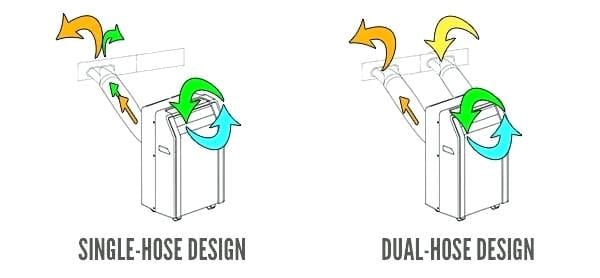
Single-hose ACs create negative pressure by exhausting room air, pulling in unconditioned hot air through gaps. Dual-hose models draw outdoor air for condenser cooling, avoiding this issue and improving efficiency by 40-50%. For a 150 sq ft room, choose a 10,000 BTU dual-hose unit (like Whynter ARC-122DS) over a single-hose equivalent. Verify the exhaust hose diameter matches your window kit—kinks reduce efficiency by 25%. Position units away from walls to ensure 12-inch clearance for optimal airflow.
Optimize AC Operation to Feel 6°F Cooler Instantly
Your thermostat setting matters less than how you manage airflow and humidity. These tweaks deliver immediate perceived cooling.
Set Thermostats to 78°F While Using Ceiling Fans
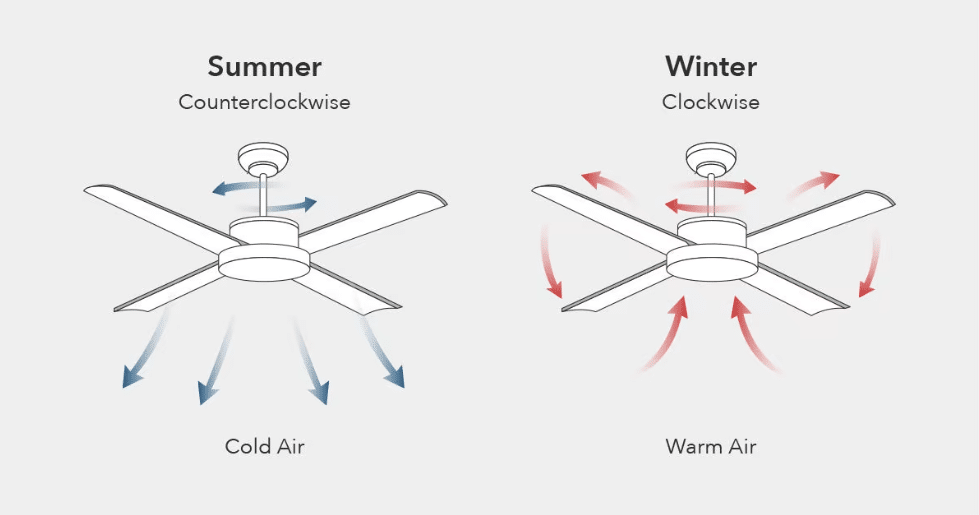
Run ceiling fans counterclockwise at medium speed to create a wind-chill effect that makes rooms feel 4-7°F cooler. This allows thermostat settings at 78°F (the Department of Energy’s efficiency sweet spot) without sacrificing comfort. Critical mistake: Never run fans in unoccupied rooms—they cool people, not spaces, wasting energy. For bedrooms, add a bed fan blowing across your feet; evaporative cooling at pulse points drops perceived temperature faster than whole-room cooling.
Pair AC with Dehumidifiers in Humid Climates
At 60% humidity, 78°F feels like 75°F—but at 75% humidity, it feels like 81°F. Run a 50-pint dehumidifier alongside your AC to maintain 50% humidity, letting you raise the thermostat 3-4°F while feeling cooler. Place dehumidifiers away from walls (6-inch clearance) and empty tanks before bedtime to avoid morning humidity spikes. In dry climates (below 40% humidity), skip dehumidifiers—they waste energy since evaporative cooling works efficiently.
Maintain AC Systems to Prevent 30% Efficiency Loss
Dirty filters and blocked coils force systems to work 15-30% harder, raising energy bills and reducing cooling capacity.
Clean Filters and Coils Every 30 Days
Turn off power, remove the front panel, and vacuum dust from AC filters with a brush attachment. Wash reusable filters in soapy water, then air-dry completely before reinstalling. For window units, pull the outdoor grille and use a garden hose (low pressure) to rinse condenser coils—never use high-pressure sprayers that bend fins. Pro tip: Mark your calendar “Filter Friday” on the first Friday of each month during cooling season. Neglecting this causes frozen evaporator coils, which stop cooling entirely.
Diagnose Flashing Light Errors Immediately
A flashing power light often indicates communication failure—unplug for 60 seconds to reset. If the temperature display flashes, check for blocked air intakes (keep 12 inches clear). Persistent errors after resetting mean refrigerant issues or electrical faults requiring professional service. Never ignore frozen coils (ice on indoor units)—this signals airflow problems that can destroy compressors if ignored.
Upgrade Bedding for Instant Sleep Cooling
Your mattress retains body heat, making you feel up to 5°F warmer than room temperature. Strategic fabric choices combat this.
Switch to Bamboo or Tencel Sheets for Breathability
Natural fibers like bamboo (viscose) and Tencel wick moisture 50% faster than cotton, evaporating sweat before it pools. Opt for percale weave (200-400 thread count)—higher counts trap heat. Avoid flannel or polyester blends, which insulate like blankets. For immediate relief, freeze a hot water bottle for 10 minutes, then place it at your feet; the cold surface draws heat from your core.
Add Targeted Bed Cooling Without Whole-Room AC
Place a damp towel over a box fan blowing across your bed for evaporative cooling. Cooling gel pads under your pillow lower head temperature, triggering full-body cooling. If using AC, set it to 78°F with a bed fan—this uses 30% less energy than cooling to 72°F while providing identical comfort.
Prevent Heat Buildup in Attics and Walls
Your attic can hit 150°F on sunny days, radiating heat downward even with AC running.
Install Attic Ventilation Before Summer Peaks

Ridge vents combined with soffit vents create continuous airflow that reduces attic temps by 20-30°F. In existing homes, add gable vents or solar-powered attic fans ($150 installed). For immediate relief, lay radiant barrier foil (like Reflectix) over attic flooring—this reflects 95% of radiant heat. Seal attic access doors with weatherstripping to prevent heat leakage into living spaces.
Use Thermal Mass to Your Advantage
Tile or concrete floors absorb heat during the day, releasing it slowly at night. Open windows from 10 p.m. to 6 a.m. to flush this stored heat. During daytime, close windows and draw curtains to “trap” the cooled thermal mass. In bedrooms, place a bowl of ice in front of a fan—the melting ice absorbs ambient heat while the fan distributes cool air.
Final Note: The fastest way to make a room cooler combines heat exclusion (shading/sealing), strategic ventilation, and targeted airflow. Start tonight: seal window gaps, set your thermostat to 78°F, and run a ceiling fan counterclockwise. Within 30 minutes, you’ll feel 4-6°F of instant cooling relief. For lasting results, implement dual-hose AC with dehumidification and bamboo bedding—these reduce energy costs by 25% while keeping rooms consistently comfortable. Remember: cooling the air matters less than cooling your body; a damp cloth on your neck works faster than dropping the thermostat 5 degrees. Stay cool without breaking the bank.