
That musty taste in your office water cooler isn’t just unpleasant—it’s a red flag. Mineral scale, bacterial biofilm, and algae silently build up inside your dispenser, contaminating every sip. Ignoring this hidden grime risks health issues and ruins water quality, turning your hydration station into a germ factory.
You don’t need professional help to fix this. With a vinegar bottle and 60 minutes, you can eliminate limescale, kill pathogens, and restore crisp-tasting water. This guide cuts through the confusion with precise steps for top-load, bottom-load, and hot/cold dispensers—no technical jargon, just actionable solutions proven to work.
Essential Supplies for Water Cooler Cleaning
Skip generic “cleaning kits” and grab these specific items:
– White distilled vinegar (1:3 ratio with water for descaling) or citric acid powder (2 tbsp per gallon)
– Unscented household bleach (5-8% sodium hypochlorite only—never scented or splashless)
– Long-handled bottle brush and soft toothbrush for faucets
– Microfiber cloths and large bucket for draining
– Paperclip (to unclog spout debris)
Pro Tip: Avoid commercial cleaners unless NSF-51 certified—they can leave toxic residues in water lines.
Critical Safety Prep Before Cleaning
Skipping these steps risks electric shock or chemical burns:
1. Unplug the unit immediately—never clean while powered.
2. Turn off water supply at the source for plumbed-in models.
3. Cool the hot tank for 2+ hours if your dispenser has hot water (prevents scalding during cleaning).
4. Place towels under faucets to catch drips during disassembly.
Warning: Never mix vinegar and bleach—the reaction creates toxic chlorine gas.
Deep Clean Your Water Cooler Dispenser: 6-Step System Reset
Drain All Water Tanks Completely
Start by emptying internal reservoirs—a single drop left can dilute cleaning solutions. For all cooler types:
– Position a bucket under hot and cold faucets.
– Hold both levers open until water stops flowing (3-5 minutes).
– Remove the empty bottle or disconnect water lines.
– For bottom-load models, detach the reservoir access panel per your manual.
Look for: Milky residue or sediment in drained water—signs of heavy contamination.
Wipe Exterior Surfaces with Vinegar Solution
While draining, tackle high-touch zones:
– Mix 1:1 vinegar and water in a spray bottle.
– Scrub the drip tray, cabinet, and guard with a microfiber cloth.
– Focus on the spout area—bacteria thrive where hands touch.
– Rinse with clean water to prevent vinegar odor transfer.
Avoid abrasive sponges—they scratch surfaces and trap more bacteria.
Remove Limescale with Vinegar or Citric Acid
Mineral deposits clog lines and cause slow flow. Here’s how to dissolve them:
1. Mix 1 part vinegar to 3 parts water (or 2 tbsp citric acid per gallon).
2. Pour solution into the reservoir until it reaches the fill line.
3. Soak for 30-60 minutes (overnight for severe scale).
4. Use a bottle brush to scrub tank walls—never use metal tools.
5. Drain solution completely, then flush with 3+ gallons of fresh water until vinegar smell vanishes.
Time Saver: For bottleless models, circulate solution through the pump first.
Sanitize Faucets with Bleach Solution
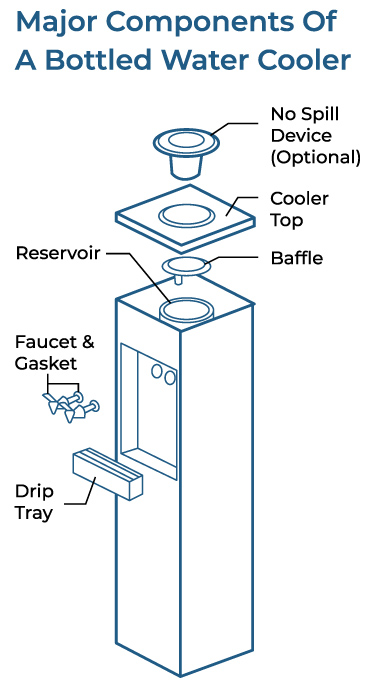
Spigots harbor 90% of dispenser bacteria—clean them properly:
– Remove faucets if possible (check your manual).
– Soak in 1 tbsp bleach per gallon of water for 5 minutes max.
– Scrub interior spouts with a toothbrush—pay attention to tiny crevices.
– Rinse 5+ times under running water to eliminate bleach taste.
Critical: Never exceed 10 minutes soak time—bleach damages rubber seals.
Disinfect Internal Reservoirs
Descaling removes scale but not pathogens. Sanitize next:
1. Prepare 1 tsp bleach per gallon of cool water.
2. Pour into reservoir and run through faucets for 30 seconds.
3. Wait exactly 5 minutes (no more—bleach degrades seals).
4. Drain, then flush 5+ gallons until zero chlorine odor remains.
5. Taste-test water—stop flushing only when flavor is neutral.
Warning: Skipping this step leaves dangerous bacteria like Pseudomonas.
Reassemble and Final Flush
Rushing reassembly traps contaminants:
– Air-dry all parts on a clean towel (2 hours minimum).
– Wipe exterior with 70% isopropyl alcohol.
– Reinstall faucets and drip tray securely.
– Plug in unit and run 2 gallons through each faucet before use.
Pro Tip: First post-clean glass should taste pure—re-flush if metallic or chemical notes linger.
Clean Water Cooler Faucets Without Removal
Can’t detach spouts? Use this emergency fix:
1. Straighten a paperclip to clear clogged holes.
2. Soak a cloth in vinegar solution and wrap it around the spout.
3. Hold in place for 15 minutes while the lever is open.
4. Flush with 1 gallon of water to remove debris.
Do this monthly—even “clean” faucets grow biofilm in 30 days.
Vinegar Descaling for Heavy Mineral Buildup

When water flow slows drastically, scale is severe:
– Use undiluted white vinegar (no water added).
– Fill reservoir and soak overnight (8+ hours).
– Drain, then scrub stubborn deposits with a soft brush.
– Flush with 5+ gallons—vinegar’s pungency requires extra rinsing.
Never use lemon juice—it sugars lines and feeds bacteria.
Cleaning Frequency by Usage Level
| User Count | Full Cleaning Schedule | Critical Signs to Clean Immediately |
|---|---|---|
| 1-3 people | Every 6 months | Cloudy water, slow flow |
| 4-10 people | Every 3 months | Musty taste, visible slime |
| 10+ people | Monthly | Algae in reservoir, faucet clogs |
Office coolers need 2x more cleaning than home units—high traffic spreads germs faster.
Bottom-Load Water Cooler Deep Clean Shortcut
No bottle well to access? Modify standard steps:
– Remove the water jug and locate the reservoir access panel (usually under the base).
– Pour vinegar/bleach solution directly into the access port.
– Cycle solution through faucets by pressing the pump button repeatedly.
– Flush lines by running water until clear—bottom-load models need 20% more rinse water.
Always consult your manual—some require reservoir disassembly.
Top-Load Dispenser Cleaning Without Leaks
Avoid spill disasters with this method:
1. Place a dry towel inside the bottle well before pouring solutions.
2. Use a funnel to direct vinegar/bleach into the fill tube—not the well.
3. Tilt the cooler backward slightly when draining to empty all hidden corners.
4. Clean the bottle neck seal with a vinegar-dampened cloth to prevent contamination.
Key: Never pour solutions directly into the bottle seat—this causes leaks.
Hot Water Dispenser Cleaning Protocol

Hot tanks breed scale fastest—clean them right:
– Unplug and cool for 3+ hours (hot water + cleaning solution = burns).
– Mix solution in a separate container—never add vinegar/bleach directly to hot tank.
– Pour cooled solution into the reservoir slowly to avoid splashing.
– Flush hot lines first during rinsing—trapped solution causes metallic tastes.
Never skip hot tank cleaning—scale here reduces heating efficiency by 40%.
Regular maintenance isn’t optional—it’s your defense against contaminated water. By following these precise steps every 3-6 months, you’ll eliminate 99.9% of bacteria and scale while extending your cooler’s life. Keep a cleaning log on the unit: next time you taste clean water, you’ll know exactly why. For persistent issues like leaks or slow flow after cleaning, call a professional—some internal failures require specialized tools. Now refill that bottle and enjoy water that’s truly pure.