
You’re managing a data center during a summer heatwave when server temperatures suddenly spike. Instead of frantically searching for water leaks like you would with a cooling tower, you check your dry cooler system—knowing it operates without a single drop of water. This sealed, air-driven solution quietly maintains critical temperatures while cutting operational costs. Understanding how does a dry cooler work reveals why industries from manufacturing to cloud computing increasingly rely on this technology. Unlike evaporative systems, dry coolers reject heat through pure convection, eliminating water consumption and contamination risks. In this guide, you’ll discover the precise mechanics that make dry coolers indispensable for sustainable, low-maintenance cooling in water-scarce regions and sensitive environments.
Dry Cooler Heat Transfer: Air Over Coils Without Water Evaporation
Dry coolers operate on a fundamental principle: ambient air directly cools a sealed heat transfer fluid through convection alone. This closed-loop system circulates water or water-glycol mixtures that absorb heat from industrial processes, then channels this warmed fluid through specialized coils. Crucially, no water evaporates during cooling—unlike cooling towers that lose significant volumes to drift and blowdown. The temperature gap between the hot fluid (typically 95–120°F/35–49°C) and ambient air drives heat rejection. When outdoor temperatures stay below the fluid’s inlet temperature, dry coolers achieve consistent cooling without chemical treatments or water sourcing. This air-to-fluid exchange happens continuously, making the system ideal for facilities prioritizing water conservation without sacrificing thermal control.
Why Ambient Air Temperature Dictates Performance
Your dry cooler’s efficiency hinges entirely on the difference between incoming fluid temperature and outside air. During 100°F (38°C) days, the reduced temperature gap slashes cooling capacity by 30–40% compared to 70°F (21°C) conditions. Always size systems for your location’s peak ambient temperature—installing oversized units in desert climates prevents summer performance drops. Monitor real-time ΔT (temperature differential) using the control system’s sensors; if fluid exits only 5–10°F (3–6°C) cooler than inlet, ambient heat is overwhelming the coil. Pro tip: Position units in shaded, unobstructed airflow zones to gain 5–8°F (3–4°C) of effective cooling capacity.
Heat Exchanger Core: Maximizing Surface Area for Heat Rejection

The fin-and-tube coil assembly forms the dry cooler’s thermal engine. Copper or aluminum tubes carry the hot process fluid, while tightly spaced aluminum fins dramatically increase surface contact with passing air. These fins—often 1/8-inch thick with 10–12 fins per inch—create turbulence that pulls heat from tubes 3x faster than smooth surfaces. Inspect fins monthly for dust buildup; just 1/16-inch of grime reduces efficiency by 15%. Bent fins from improper cleaning further restrict airflow, so always use soft brushes. Critical detail: Tube material must match your fluid chemistry—aluminum excels with glycol mixes but corrodes with hard water, while copper withstands higher pH levels.
Diagnosing Core Blockage in 3 Steps
- Check temperature differentials: Measure fluid inlet vs. outlet temps. A drop under 10°F (6°C) signals poor heat transfer.
- Inspect airflow patterns: Hold tissue strips 6 inches from the coil; inconsistent flutter reveals fin obstructions.
- Verify fan operation: Listen for uneven motor hum indicating blade imbalance from debris.
Fan System: Precision Airflow Control for Variable Loads
Industrial-grade axial fans (3–8 ft diameter) force ambient air through the coil at 50,000–200,000 CFM. Unlike fixed-speed systems, modern units use variable frequency drives (VFDs) that adjust fan speed based on real-time thermal demands. When process heat decreases, the control system throttles fans to 40% speed—slashing energy use by 65% compared to constant operation. During winter, fans may cycle off entirely as sub-40°F (4°C) air provides passive cooling. Warning: Never block fan intakes—obstructions create hotspots that warp coils. Always maintain 3 ft of clearance around all sides for uniform airflow distribution.
Preventing Fan Motor Burnout
Overheating motors cause 70% of fan failures. Install thermal cut-offs that shut down units if motor temps exceed 176°F (80°C). Lubricate bearings quarterly with high-temperature grease compatible with your climate—arctic regions need NLGI #2 grease, while deserts require #1.5 for viscosity stability. If fans shudder during startup, immediately power down to check for ice accumulation (in cold climates) or bent blades.
Fluid Circulation Loop: Pumping Heat Through Sealed Pathways
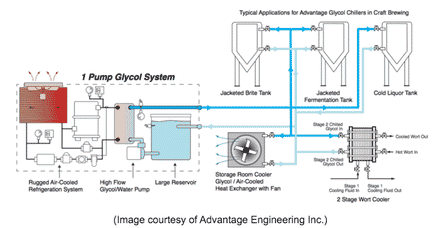
A dedicated pump continuously circulates the heat transfer fluid from heat sources (like data center racks) to the dry cooler. This closed loop prevents contamination—no exposure to airborne particulates or chemical treatments required. Glycol mixtures (typically 30–50%) protect against freezing down to -20°F (-29°C), while pure water suits temperate zones. Pump sizing is critical: undersized units cause flow rates below 2 GPM/ton, overheating equipment; oversized pumps waste energy. Verify flow with inline sight glasses—steady streams indicate proper velocity, while bubbles signal air ingress needing bleed valves.
Glycol Mixture Troubleshooting Guide
| Symptom | Likely Cause | Fix |
|---|---|---|
| Sludge in strainers | Degraded glycol | Flush system, replace with inhibited glycol |
| Corrosion spots | Wrong pH level | Test fluid, adjust to 8.5–10.5 with inhibitors |
| Reduced cooling | Low glycol concentration | Measure with refractometer, top up to 40% |
Water Conservation: Eliminating Consumption in Cooling Cycles
Dry coolers cut facility water usage to zero for heat rejection—saving 1,000+ gallons daily per 100-ton system versus evaporative towers. This makes them essential in drought-prone areas like California or Arizona, where water rights cost $1,200–$2,000 per acre-foot annually. Beyond direct savings, you avoid $15,000–$50,000 yearly in water treatment chemicals, blowdown disposal fees, and Legionella testing. Cities like Phoenix now mandate dry coolers for new data centers, recognizing their role in sustainable infrastructure. For every 1°F (0.6°C) you raise the fluid setpoint, water savings increase by 2.5% without impacting equipment safety.
Contamination Prevention: Closed-Loop System Advantages
With no open water basin, dry coolers eliminate biological growth like Legionella and scaling from mineral deposits. Your process fluid stays pristine for 5+ years versus 12–18 months in cooling towers. This is non-negotiable for pharmaceutical labs or food processing where even trace contaminants ruin batches. In semiconductor plants, pure glycol loops prevent particulate corrosion in microchannel coolers—saving $200,000+ in wafer scrap monthly. Always specify stainless steel piping for oxygen-sensitive processes; carbon steel introduces rust particles that clog narrow passages.
Low Maintenance Requirements vs. Cooling Towers
Skip the daily basin checks, quarterly descaling, and biocide dosing required for evaporative systems. Dry coolers need only:
– Monthly: Coil cleaning with compressed air (no chemicals)
– Quarterly: Fan bearing lubrication and VFD calibration
– Annually: Leak testing and glycol analysis
This reduces maintenance labor by 60%—freeing technicians for critical tasks. Unlike towers with 20+ wear points, dry coolers have 50% fewer components prone to failure. No more replacing clogged nozzles or drift eliminators; just inspect fins for damage after hail storms. In desert installations, add bi-annual anti-corrosion coating to steel frames combating salty air.
Data Center and Industrial Applications
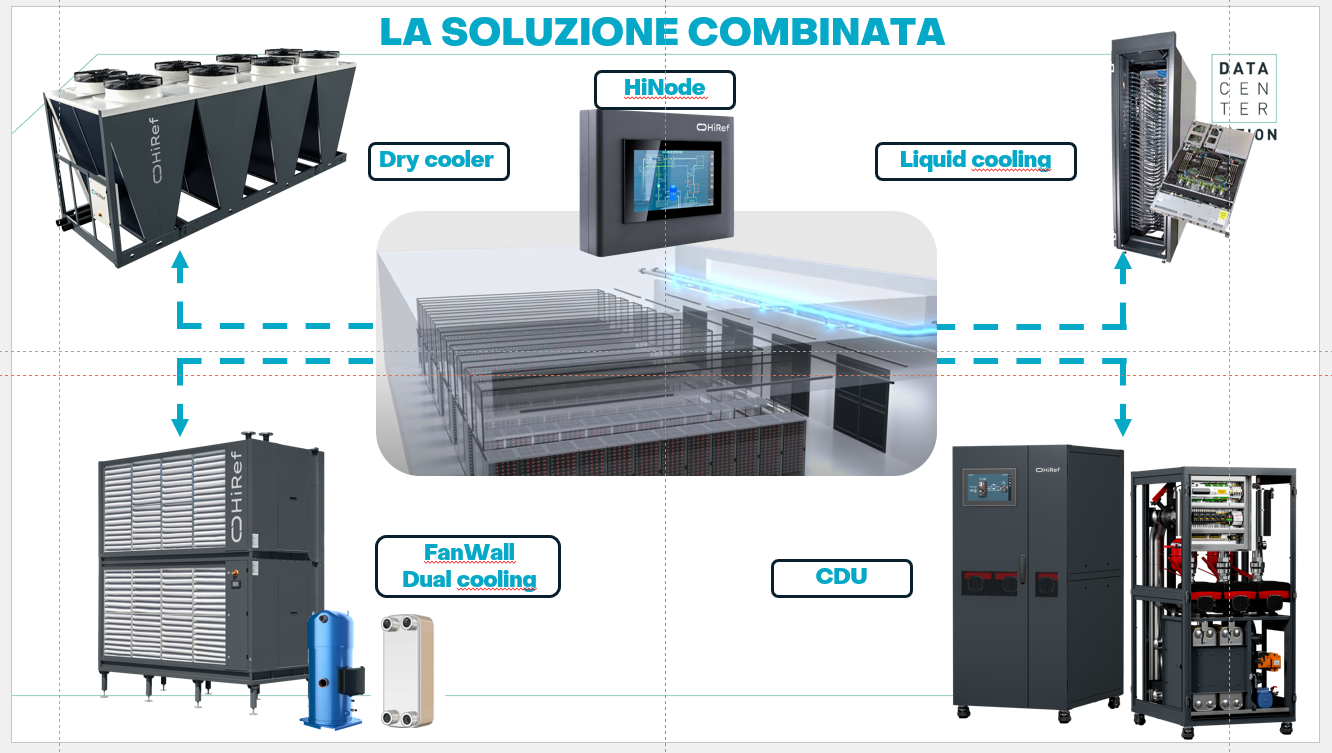
Servers generate 300–500 BTU/kW of waste heat—dry coolers handle this load silently in outdoor units while keeping server rooms contaminant-free. Top use cases:
– Data Centers: 85% of new hyperscale facilities use dry coolers for primary cooling, avoiding humidity spikes from towers that trigger server shutdowns.
– Laser Cutting: Maintain 77°F (25°C) coolant temps for precision optics without water impurities fogging lenses.
– Breweries: Cool wort kettles using glycol loops that won’t taint batches with tower chemicals.
Always pair dry coolers with adiabatic spray systems in extreme heat; misting air pre-cools intake by 15°F (8°C) using 95% less water than towers.
Temperature Differential Design Essentials
Your ΔT (inlet fluid temp minus ambient air temp) determines dry cooler sizing. A 20°F (11°C) ΔT allows 30% smaller units than 10°F (6°C) systems. Calculate minimum ΔT as:
Fluid Inlet Temp – (Ambient Design Temp + 5°F)
Example: 100°F (38°C) fluid with 95°F (35°C) summer temps = 5°F ΔT—requiring oversized coils. Solution: Raise fluid inlet to 105°F (41°C) to achieve 10°F ΔT. Never design below 8°F (4°C) ΔT; efficiency plummets below this threshold. In cold climates, add glycol concentration to prevent freezing during low-load operation.
Energy-Saving Controls for Variable Conditions
VFDs on fans and pumps cut energy use by 25–40% through intelligent modulation. The control system:
1. Reads fluid temperature sensors every 15 seconds
2. Slows fans when ΔT exceeds setpoint (e.g., 10°F/6°C)
3. Stages multiple fans during partial loads
Integrate with BMS for weather-based optimization—reducing fan speed 10% for every 5°F (3°C) below design temperature. During winter, activate “free cooling” mode where fans idle and building heat directly warms return fluid. Always set low-temperature cutoffs at 35°F (2°C) to prevent glycol gelling.
Ambient Temperature Limits and Mitigation Strategies
Dry coolers lose effectiveness when ambient air exceeds fluid inlet temperature—common in Middle Eastern summers. Combat this by:
– Elevating units on rooftops to access cooler air strata
– Installing shade structures reducing coil temp by 7–10°F (4–6°C)
– Using thermal buffers like ice storage tanks for peak load shaving
For critical facilities, hybrid systems switch to adiabatic mode only during 5% of hottest hours—preserving 95% of water savings. Monitor wet-bulb temperatures; if above 75°F (24°C), dry coolers outperform evaporative towers in total cost of ownership.
Understanding how does a dry cooler work transforms your approach to thermal management. By leveraging ambient air without water loss, these systems deliver reliable cooling while slashing operational costs and environmental impact. Prioritize regular coil cleaning and glycol maintenance to sustain peak efficiency for 15+ years. For facilities in water-stressed regions or contamination-sensitive industries, dry coolers aren’t just an option—they’re the future-proof standard. Implement the design and control strategies outlined here to maximize your system’s performance through every season.